Trichlor Tablets for a 10,000-Gallon Vinyl Liner Pool When CYA Is at 80 ppm
When cyanuric acid reaches 80 ppm in a 10,000-gallon vinyl liner pool, adding more trichlor tablets is the wrong move. This article explains how much chlorine you actually need each week, why trichlor makes the CYA problem worse, and what to use instead.

Trichlor Tablets for a 10,000-Gallon Vinyl Liner Pool When CYA Is at 80 ppm
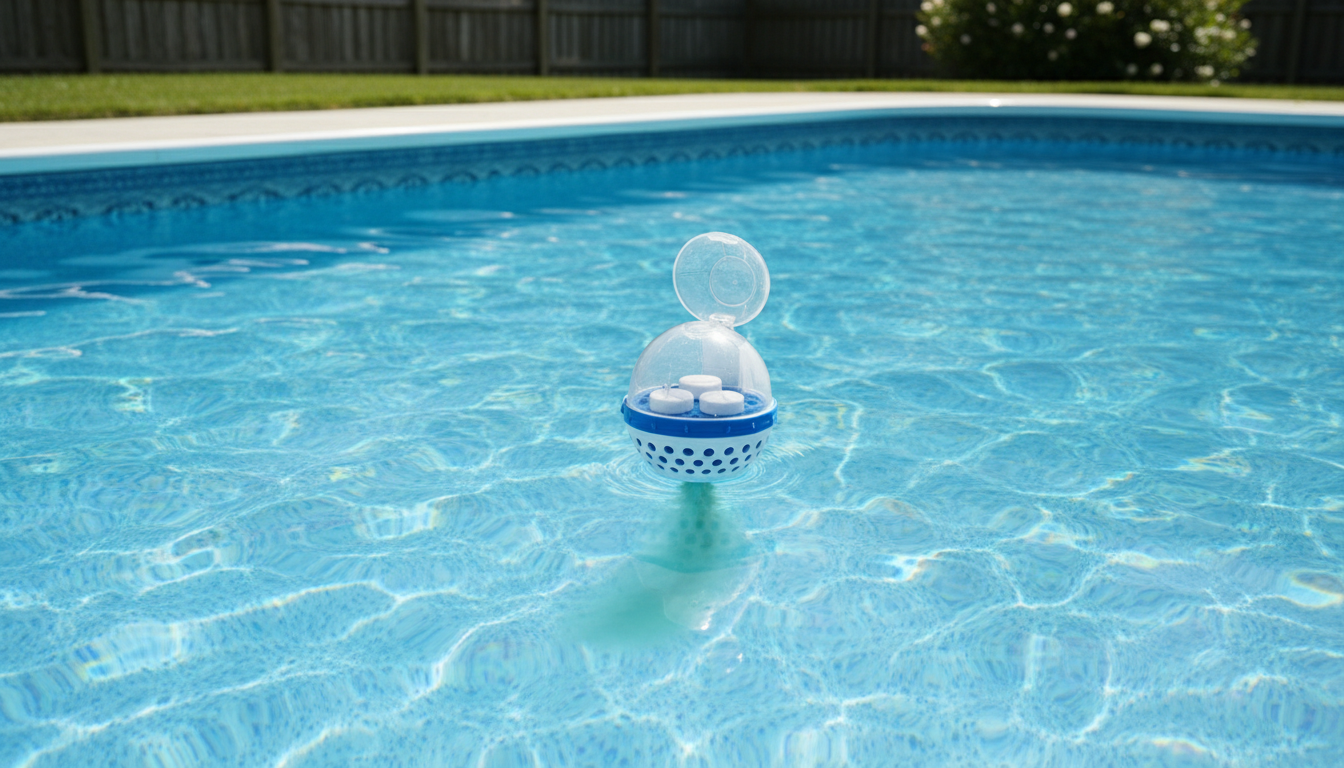
You bought a floating dispenser, loaded it with 3-inch trichlor tablets, and figured chlorine was handled. Then you tested your water and saw CYA creeping past 80 ppm, and now you are wondering how many tablets to toss in this week to keep things balanced. That frustration is very common, and the answer is probably not what you were hoping for.
At CYA 80 ppm in a 10,000-gallon vinyl liner pool, the correct weekly trichlor tablet dose is zero. Trichlor contains cyanuric acid as a built-in stabilizer, so every tablet you add raises CYA further, and at 80 ppm you are already at the edge of the safe ceiling. This article explains why that ceiling matters, how to calculate the chlorine your pool actually needs at this CYA level, what to switch to instead of tablets, and when partial draining is the only real path forward.
Why CYA at 80 ppm Changes Everything
Cyanuric acid (CYA), also called pool stabilizer or conditioner, protects chlorine from UV breakdown. At the right level (30 to 50 ppm), it makes chlorine last several times longer in sunlight. That is a good thing. But CYA does not just shield chlorine from the sun; it also slows down how quickly chlorine attacks bacteria, algae, and other contaminants. The higher CYA climbs, the more sluggish your chlorine becomes, even if the test strip shows a perfectly normal free chlorine reading.
At 80 ppm CYA, chlorine is significantly hampered. Most pool chemistry references, including guidelines used by pool professionals, treat 90 ppm as the absolute residential ceiling. Above that, you essentially need so much free chlorine to get any sanitation effect that the pool becomes practically unmanageable. At 80 ppm you are one or two tablets away from that cliff. For a thorough look at how CYA accumulates and when it crosses from helpful to harmful, the site’s own guide on Pool Stabilizer: When You Need It and When It’s Already Too High walks through the numbers in detail.
How Much CYA Each Trichlor Tablet Adds
A standard 3-inch trichlor tablet (8 oz) is roughly 90 percent trichloro-s-triazinetrione by weight. About 57 percent of that weight is chlorine and about 43 percent is the CYA carrier. In a 10,000-gallon pool, one 8-oz tablet adds approximately 5 to 6 ppm of CYA on top of the chlorine it delivers.
Say you normally use two tablets a week. That is 10 to 12 ppm of additional CYA every seven days. Starting at 80 ppm, two weeks of normal tablet use puts you at 90 to 100 ppm, which is squarely in the zone where many health departments would order the pool closed. The tablets feel like a convenience, but they are a slow-motion CYA accumulator, and once CYA is in the water, no chemical removes it.
What Free Chlorine You Actually Need at CYA 80 ppm
Free chlorine effectiveness is not just about the ppm number on your test kit. It depends on the ratio of free chlorine to CYA. Pool professionals use the guideline that free chlorine should be maintained at a minimum of 7.5 percent of CYA to remain effective. At CYA 80 ppm, that works out to a minimum free chlorine of 6 ppm. Most pools run at 2 to 3 ppm free chlorine with CYA in the 40 ppm range, so you are already looking at needing two to three times more active chlorine just to stay safe.
Here is a worked example. Your 10,000-gallon vinyl liner pool loses about 2 to 3 ppm of free chlorine per day on a hot, sunny summer day through chlorine demand and UV burn-off. At CYA 40 ppm, you top up from 2 ppm to 4 ppm and you are fine. At CYA 80 ppm, you need to maintain 6 ppm minimum, which means adding enough chlorine to cover daily losses and stay above that 6 ppm floor. In a 10,000-gallon pool, raising free chlorine by 1 ppm requires about 13 oz of liquid chlorine (10% sodium hypochlorite). To add 3 ppm, you need roughly 39 oz, or just under a half gallon, every day or two. That is the actual chlorine workload your pool carries at 80 ppm CYA.
What to Use Instead of Trichlor Tablets
When CYA is already high, switch to unstabilized chlorine sources that add chlorine without adding more CYA. Your two practical options for a vinyl liner pool are liquid chlorine and calcium hypochlorite (cal-hypo).
- Liquid Chlorine (Sodium Hypochlorite): Typically sold at 10 to 12.5 percent concentration. It adds no CYA, no calcium, and no pH spike bad enough to threaten a vinyl liner. It is the most liner-friendly choice and works fast. Dose directly into the deep end with the pump running.
- Calcium Hypochlorite (Cal-Hypo): Usually 65 to 73 percent available chlorine. No CYA, but it does raise calcium hardness over time. In a vinyl liner pool, calcium hardness above 400 ppm is not the structural concern it is in plaster pools, but it can cause cloudiness. Pre-dissolve cal-hypo in a bucket before adding it to a vinyl liner pool to avoid bleach spots on the liner.
- Dichlor (avoid at high CYA): Dichlor is another stabilized tablet or granular form. Like trichlor, it contains CYA. At 80 ppm, dichlor is just as counterproductive as trichlor tablets. Skip it.
AquaDoc’s liquid chlorine is formulated at 12.5 percent concentration and is a product vinyl liner pool owners use specifically because it delivers a clean chlorine hit without calcium or stabilizer buildup.
The Real Fix: Partial Dilution
Switching to liquid chlorine keeps CYA from climbing higher, but it does not lower the 80 ppm you already have. No chemical additive reduces CYA in pool water. The only way to bring it down is to remove water that contains CYA and replace it with fresh water that contains none.
For a 10,000-gallon vinyl liner pool, draining 25 to 30 percent of the water (2,500 to 3,000 gallons) and refilling with fresh water will cut CYA from 80 ppm to roughly 56 to 60 ppm. That puts you back in a workable range where trichlor tablets can be used sparingly again, if you choose to use them at all. Many pool owners at this point switch to liquid chlorine permanently and add a small dose of plain granular stabilizer in spring if CYA ever drops below 30 ppm.
When draining, check your liner first. A vinyl liner that has been holding water for years can shrink slightly when emptied, and in cold weather it can crack. Drain no more than 30 percent at one time and refill the same day. If you are curious about liner longevity and what stresses it most, the breakdown on replastering a 15×30 inground pool offers useful context on how water chemistry decisions affect liner and surface life over time.
Week-by-Week Plan for a 10,000-Gallon Pool at CYA 80 ppm
- Stop adding trichlor tablets immediately. Remove the floating dispenser and set it aside until CYA is back below 60 ppm.
- Test free chlorine and target 6 to 8 ppm. Use liquid chlorine to get there. At 10 to 12.5 percent concentration, roughly 1.5 quarts raises a 10,000-gallon pool by about 5 ppm.
- Plan a partial drain. Schedule the drain and refill for a warm day when the liner is pliable. Drain 2,500 to 3,000 gallons and refill.
- Retest CYA after refill. Confirm it is now below 60 ppm before returning to any stabilized chlorine product.
- Maintain with liquid chlorine or cal-hypo going forward. If you go back to trichlor tablets, use no more than one tablet per week in a 10,000-gallon pool and test CYA monthly to catch creep before it hits 70 ppm again.
Common Mistakes to Avoid
- Thinking more chlorine fixes the problem: Adding extra trichlor tablets when chlorine looks low just adds more CYA. The chlorine ineffectiveness at 80 ppm is structural, not a dosing shortage.
- Using a CYA reducer product: Several products claim to reduce CYA. Most have very limited evidence of effectiveness in real pools. Partial draining is the proven method.
- Skipping the free chlorine recalculation: Many pool owners keep targeting 2 to 3 ppm free chlorine after CYA climbs. At 80 ppm CYA, 3 ppm free chlorine is functionally close to zero sanitation. Target 6 to 8 ppm until CYA is lowered.
- Draining too much at once: On a vinyl liner pool, draining more than 30 percent at once risks liner shrinkage or collapse, particularly in cooler weather. Take it slow.
Frequently Asked Questions
How much trichlor tablet should I add weekly to a 10,000-gallon pool?
At normal CYA levels between 30 and 50 ppm, one to two 3-inch trichlor tablets per week is a typical starting point for a 10,000-gallon pool. At CYA 80 ppm, the correct answer is zero tablets. Switch to liquid chlorine or cal-hypo until you have diluted CYA back below 60 ppm through a partial drain and refill.
What happens if CYA goes above 80 ppm in a vinyl liner pool?
Above 80 ppm, cyanuric acid over-stabilizes chlorine to the point where it cannot reliably sanitize the water even at elevated free chlorine levels. The EPA and most state health codes treat 90 ppm as the ceiling for residential pools. At that point, the only effective remedy is dilution by partially draining and refilling with fresh water.
Can I still use trichlor tablets when CYA is at 80 ppm?
No. Each 3-inch trichlor tablet adds roughly 5 to 6 ppm of CYA to a 10,000-gallon pool. Adding tablets at CYA 80 ppm will push you past 90 ppm within a week or two, making chlorine nearly useless regardless of how much you add. Stop tablets and switch to an unstabilized chlorine source immediately.
How do I lower CYA in a vinyl liner pool without draining the whole thing?
Partial dilution is the standard, proven method. Draining 25 to 30 percent of a 10,000-gallon pool (roughly 2,500 to 3,000 gallons) and refilling with fresh water will bring CYA from 80 ppm down to approximately 56 to 60 ppm. Do this on a warm day, refill immediately, and retest before resuming any stabilized chlorine product.
What free chlorine level do I need to maintain with CYA at 80 ppm?
With CYA at 80 ppm, target a minimum free chlorine level of 6 ppm, based on the standard professional guideline of keeping free chlorine at or above 7.5 percent of CYA. That is two to three times higher than the 2 to 3 ppm target used at typical CYA levels of 40 ppm. Test daily and dose with liquid chlorine to hold that floor until CYA is reduced.
When CYA hits 80 ppm in a 10,000-gallon vinyl liner pool, the right weekly trichlor tablet dose is none at all. Drain 25 to 30 percent of the water, refill, switch to liquid chlorine while CYA recovers, and your pool will be genuinely sanitized again rather than just technically chlorinated.