Baking Soda to Raise Alkalinity When Closing a 10,000-Gallon Vinyl Liner Pool
Closing a 10,000-gallon vinyl liner pool with low alkalinity? Get the exact baking soda dose you need, a worked example, and the right order of steps so your liner stays protected all winter.

Baking Soda to Raise Alkalinity When Closing a 10,000-Gallon Vinyl Liner Pool
You pull your test kit out for the last time this season, dip the strip, and the alkalinity reading comes back somewhere around 50 ppm. Not great timing when you are three days away from dropping the cover. Low alkalinity going into winter is one of those things that feels like a small problem right now but turns into a real headache by spring, especially with a vinyl liner.
The direct answer: for a 10,000-gallon vinyl liner pool, it takes approximately 1.5 lbs of baking soda to raise total alkalinity by 10 ppm. If your alkalinity is at 50 ppm and your target is 100 ppm, you need to add about 7.5 lbs of baking soda before closing. This article walks through the math, the right sequence of steps, the vinyl-specific reasons this matters more than you might think, and the most common mistakes people make trying to rush the process.
Why Alkalinity Matters More at Closing Than You Might Think
Total alkalinity is the buffer that keeps your pH from swinging. When alkalinity is low, pH becomes unstable, and over a cold, stagnant winter that instability almost always tips toward acidic. Water sitting at a pH below 7.0 for months is corrosive. For a gunite or plaster pool, that means surface etching. For a vinyl liner, it means the material itself starts to thin and stiffen, seams come under stress, and by spring you may be looking at a wrinkled or cracking liner that should have had several more seasons of life.
The safe closing range for total alkalinity is 80 to 120 ppm. That is wide enough to give the water chemistry somewhere to drift without causing damage. If you are starting below 80 ppm, baking soda (sodium bicarbonate) is the right tool: it raises alkalinity with only a modest, predictable nudge to pH, and it is safe to use with vinyl without any risk of bleaching or surface damage. As explained in the guide on Total Alkalinity vs pH: Fix TA First, Here’s Why, sorting out alkalinity before you touch pH is the smarter sequence, because a stable alkalinity makes every subsequent pH adjustment easier and more predictable.
The Exact Dose: Worked Example for a 10,000-Gallon Pool
The standard rule is 1.5 lbs of baking soda per 10,000 gallons raises total alkalinity by approximately 10 ppm. That number comes from sodium bicarbonate’s formula weight and how it dissociates in water. It is consistent and reliable enough to use as your baseline, though your actual result may vary by a ppm or two depending on your starting water chemistry.
Here is the math in plain terms:
- Test your current alkalinity. Use a reliable liquid test kit or a fresh test strip. Write down the number.
- Find your deficit. Subtract your current reading from your target. Targeting 100 ppm from a starting point of 55 ppm gives you a deficit of 45 ppm.
- Divide by 10, then multiply by 1.5. A 45 ppm deficit divided by 10 equals 4.5. Multiply by 1.5 and you get 6.75 lbs, call it 7 lbs.
- Add in two stages. Never dump the full dose in at once. Add 4 lbs first, run the pump for 4 to 6 hours, retest, then add the remainder if needed.
Quick reference table for common starting points in a 10,000-gallon pool, all targeting 100 ppm:
| Starting Alkalinity (ppm) | Deficit to 100 ppm | Baking Soda Needed |
|---|---|---|
| 80 ppm | 20 ppm | 3.0 lbs |
| 70 ppm | 30 ppm | 4.5 lbs |
| 60 ppm | 40 ppm | 6.0 lbs |
| 50 ppm | 50 ppm | 7.5 lbs |
| 40 ppm | 60 ppm | 9.0 lbs |
Why These Numbers Matter for a Vinyl Liner Specifically
Vinyl does not have the chemical buffering that plaster provides. A gunite pool shell can absorb a little acid attack from the water and show it only as surface roughness after years of neglect. Vinyl has no such tolerance. Water sitting at low alkalinity and low pH against a vinyl liner for four to five months of winter does real, measurable damage: the material loses plasticizers, becomes brittle at the seams, and in severe cases begins to separate from the bead track. Raising alkalinity to 100 ppm before closing costs you maybe 20 minutes and a few dollars in baking soda. Replacing a liner costs thousands. That is an easy tradeoff.
The other vinyl-specific concern is calcium hardness. Vinyl liner pools do not need the high calcium hardness that plaster pools require, but you still want it above 150 ppm at closing. Very soft water is aggressive water: it will seek minerals from whatever surface it touches, and with no plaster to pull from, the liner takes the hit. If your calcium hardness is also low, address alkalinity first, then hardness, then pH, in that order.
Step-by-Step: Raising Alkalinity as Part of Your Closing Sequence
Getting the chemistry right before you close is a process, not a single step. Here is the order that works:
- Test everything. Measure total alkalinity, pH, calcium hardness, and free chlorine at least two days before you plan to close. That gives you time to make corrections without rushing.
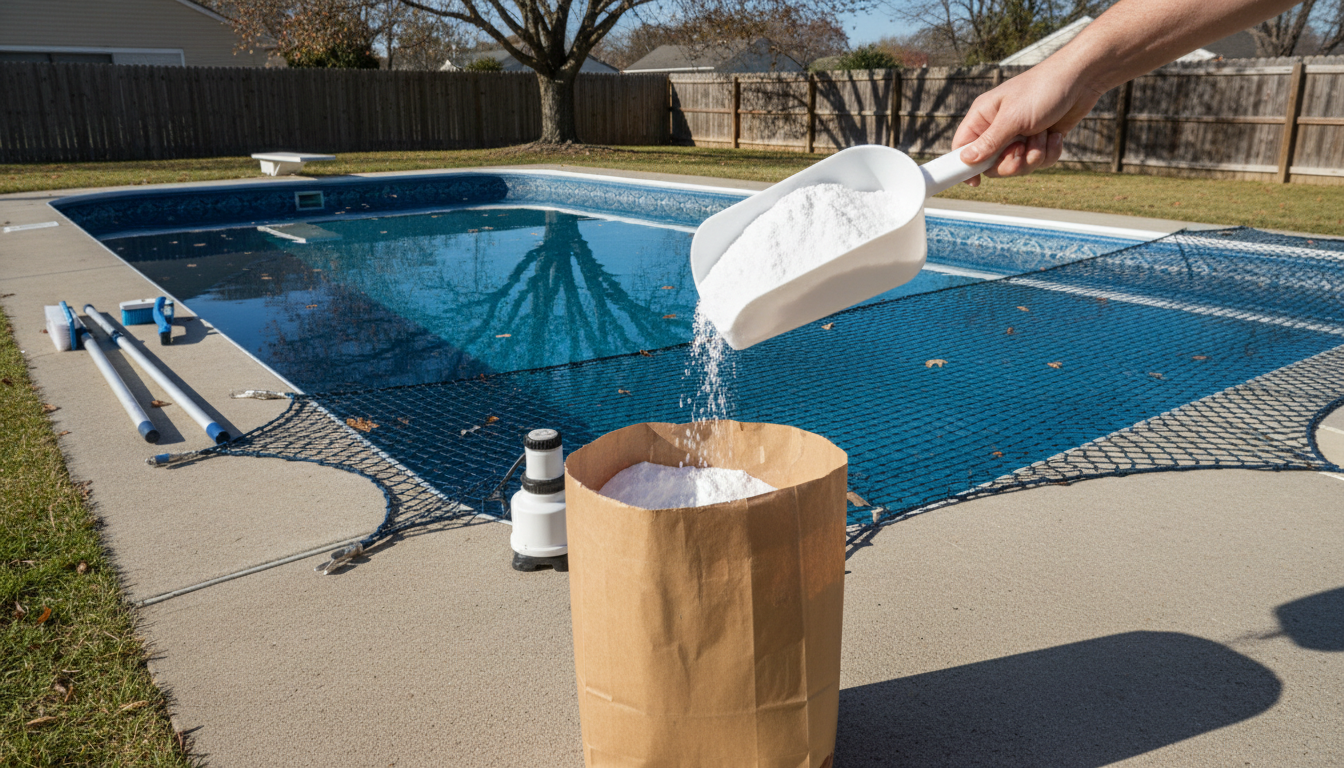
- Add baking soda first. Pre-dissolve each pound in a bucket of pool water before broadcasting it into the deep end with the pump running. This prevents the granules from sinking and sitting on the liner, which can cause temporary bleaching or stiffening of the vinyl in that spot.
- Circulate for 4 to 6 hours, then retest. Do not guess. Retest before adding more. Alkalinity can test slightly lower right after addition and settle higher after full circulation.
- Adjust pH if needed. Baking soda will nudge pH upward, usually by 0.1 to 0.2 points per dose. Your target closing pH is 7.4 to 7.6. If it climbs past 7.6, a small muriatic acid dose will bring it back without undoing your alkalinity work.
- Shock the pool. After chemistry is balanced, shock to 10 ppm free chlorine or higher. For a vinyl liner pool, liquid chlorine or cal-hypo granules dissolved completely before adding are both appropriate. AquaDoc’s pool shock is formulated to dissolve cleanly without the undissolved residue that can bleach liner surfaces when granules settle.
- Add algaecide and enzyme treatment. These go in after shock, once chlorine has started dropping from its peak.
- Lower the water level, blow out lines, and cover. For the right water level before covering, the approach varies depending on your cover type and whether your pool has a deep end.
Common Mistakes When Adding Baking Soda at Closing
- Adding the full dose at once: Dumping 7 or 8 lbs of baking soda in a single shot can overshoot your target, especially in cooler water where it dissolves more slowly. Split the dose and retest.
- Skipping pre-dissolving: Baking soda granules sitting on a vinyl liner will not damage it the way trichlor tablets would, but they can cause uneven readings and temporary cloudiness. Pre-dissolving in a bucket takes 60 seconds and avoids both problems.
- Adjusting pH before alkalinity: pH adjusters move more than you expect when alkalinity is unstable. Fix the buffer first, then fine-tune pH. The sequence matters.
- Closing on a rainy day: Rain dilutes chemistry and can tank your chlorine level right after shocking. Aim to close when you have a dry 24 to 48 hours ahead.
- Not retesting after shock: High chlorine temporarily suppresses some test kit readings. Wait until free chlorine drops to 3 to 5 ppm before taking your final pre-cover reading to get accurate numbers.
Frequently Asked Questions
How much baking soda do I need to raise alkalinity in a 10,000-gallon pool?
It takes roughly 1.5 lbs of baking soda to raise total alkalinity by 10 ppm in a 10,000-gallon pool. If your alkalinity is at 50 ppm and you need to reach 100 ppm, add approximately 7.5 lbs total, split over two or three additions with retesting in between each one.
What should total alkalinity be when closing a pool for winter?
Target 80 to 120 ppm before closing. Staying in that range prevents pH from swinging wildly over the winter months and protects your liner from the acidic water that low alkalinity produces. Aiming for 100 ppm gives you a comfortable buffer in both directions.
Can low alkalinity damage a vinyl liner over winter?
Yes. Water below 60 ppm alkalinity becomes corrosive enough to slowly degrade vinyl liner material over a winter, causing it to thin, wrinkle, or develop stress cracks at the seams. Vinyl has no plaster buffer to absorb chemistry swings, which makes hitting the 80 to 120 ppm closing target more critical than it is for other pool types.
How long after adding baking soda can I close the pool?
Run your pump for at least 4 to 6 hours after each baking soda addition, then retest. Once alkalinity holds steady in the 80 to 120 ppm range across two tests, you can proceed with shock and algaecide the same day and close within 24 hours after that.
Should I adjust alkalinity or pH first when closing a pool?
Fix alkalinity first. Total alkalinity acts as the buffer that stabilizes pH, so raising it first makes your pH adjustment smaller and more predictable. Adding baking soda also nudges pH upward slightly, which can reduce or eliminate any additional pH correction needed afterward.
When closing a 10,000-gallon vinyl liner pool with low alkalinity, the bottom line is simple: calculate your deficit, add 1.5 lbs of baking soda per 10 ppm you need to raise, do it in stages, and retest before you cover. That one hour of chemistry work protects your liner for the entire winter.