
Winter Drain-Down for a 15,000-Gallon Above-Ground Pool With a Sand Filter
Closing a 15,000-gallon above-ground pool for winter means draining to the right level, not too much and not too little. This guide walks through the exact amount to remove, how to do it safely with a sand filter setup, and the mistakes that can damage your pool before spring.

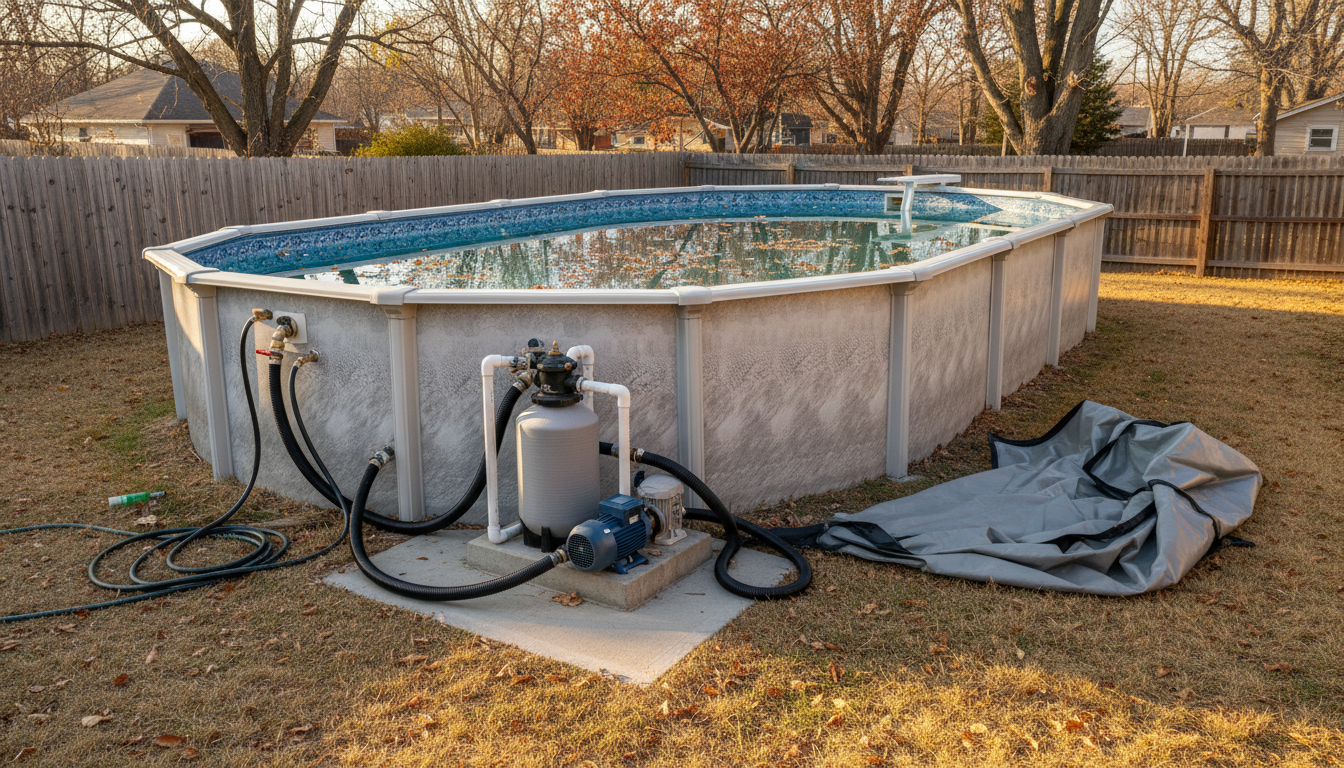
Winter Drain-Down for a 15,000-Gallon Above-Ground Pool With a Sand Filter
Closing an above-ground pool for winter is one of those jobs that sounds simple until you start second-guessing yourself. How low is low enough? Can you go too low? And what does the sand filter have to do with any of it?
For a 15,000-gallon above-ground pool, drain approximately 1,500 gallons to drop the water level 4 to 6 inches below the skimmer opening and return jet fittings. That target protects your plumbing and skimmer housing from freeze damage without starving the liner of the water weight it needs to stay seated all winter. This article walks through why that number is right, how to remove that water safely, what to do with your sand filter, and the mistakes that can cost you a new liner come spring.
Why Above-Ground Pools Need a Specific Drain-Down Level
Above-ground pools work differently from inground pools when it comes to winter water levels. The water inside is not just pool water. It is structural ballast. The liner is held against the walls by water pressure, and the walls themselves rely on that internal pressure to stay rigid. Remove too much water and the liner loses contact with the pool floor, buckles in the cold, and may never reseat properly when you refill in spring.
At the same time, leaving the water level too high creates a different problem. If water sits inside the skimmer throat, the return jet fittings, or the hose connections to your sand filter when temperatures drop below 32 degrees Fahrenheit, that water expands as it freezes. Plastic skimmer housings crack. Return fittings split. Hose barbs break off. These are not cheap repairs. Dropping the level 4 to 6 inches below those fittings keeps standing water out of the hardware entirely.
Calculating 4 to 6 Inches for a 15,000-Gallon Pool
Here is how the numbers work. A standard 15,000-gallon above-ground pool is typically a 24-foot round or a 12-by-24-foot oval filled to about 48 inches of water depth. Each vertical inch of water in a 24-foot round pool holds roughly 282 gallons. So draining 4 inches removes about 1,128 gallons, and draining 6 inches removes about 1,692 gallons. Splitting the difference and targeting 5 inches means pulling out roughly 1,410 gallons, which rounds to 1,500 gallons as a practical working number.
For a 12-by-24-foot oval pool at the same depth, the gallons-per-inch figure is a little lower, closer to 230 gallons per inch, so 5 inches of drain-down equals about 1,150 gallons. Either way, you are well under 10 percent of total pool volume, which is the right ballpark for above-ground pools regardless of shape.
How to Drain the Right Amount Without Overshooting
The most common mistake people make is setting up a sump pump or hose siphon and walking away. You come back two hours later and the pool is 18 inches low. At that point you have done real damage to your liner’s shape memory. Set a physical marker before you start.
- Mark your target level. Use a piece of waterproof tape on the inside pool wall or a grease pencil on the skimmer throat. Place it 5 inches below the bottom of the skimmer opening. That is your stop point.
- Choose your drain method. A submersible utility pump rated 30 to 50 GPM (gallons per minute) will remove 1,500 gallons in 30 to 50 minutes. A garden hose siphon runs 5 to 8 GPM and takes 3 to 5 hours for the same volume but requires no equipment you don’t already own.
- Direct the discharge away from your foundation. 1,500 gallons is enough to saturate soil against a house foundation or flood a low-lying lawn area. Run the discharge hose to a storm drain, a dry corner of the yard, or the street.
- Check frequently near the end. When the water is within an inch of your target mark, shut off the pump and let the pool settle for 10 minutes. The water will equalize and show you the true level.
- Disconnect and remove the skimmer basket and return jet fittings. Once the level is right, pull these out and store them inside for winter. Replace them with winter plugs or expansion plugs sized to your return openings (typically 1.5-inch plugs for standard above-ground returns).
What to Do With the Sand Filter Before You Close
Your sand filter needs its own winterizing steps, separate from the pool drain-down. If you skip this, you will find cracked filter housings and a broken multiport valve waiting for you in spring. If you want a refresher on how the valve positions work and where backwash fits into the routine, the guide on sand filter backwash mistakes is worth reading before you start the closing process.
- Backwash the filter one last time. Run a full backwash cycle until the sight glass runs clear, then rinse for 30 seconds. This flushes trapped debris out of the sand bed so it does not sit and decompose all winter.
- Turn off the pump and set the multiport valve to the Winterize position. Not all valves have a labeled Winterize setting. If yours does not, set it to Recirculate or the mid-position between two settings so the valve ball does not seat hard against any port and crack under freezing pressure.
- Open the drain cap at the bottom of the filter tank. Let all standing water drain out completely. This can take 10 to 15 minutes.
- Remove the drain plug and store it inside. Same goes for any drain plugs on the pump housing and the pressure gauge if it unscrews easily.
- Disconnect all hoses between the pool, pump, and filter. Drain them fully, coil them loosely, and store indoors or in a shed. Hoses left connected outdoors trap water at the low points and split by February.
AquaDoc makes a winterizing closing kit that includes sequestering agent and algaecide sized for pools in this range, which pool owners use to treat the remaining water before they put the cover on. Add your closing chemicals to the pool while the pump is still running, before you do the drain-down steps above, so the chemicals distribute evenly.
Closing Chemistry: What to Add Before the Cover Goes On
Drain-down is only half the job. The 13,500 gallons of water staying in your pool all winter still needs to be balanced and protected. Cloudy or chemically off water going into winter can stain your liner and feed an algae bloom that greets you in spring. If you have ever pulled a cover off a green pool, you know how much extra work that cleanup is. For a deeper look at what causes that cloudiness and how water chemistry plays into it, the article on cloudy pool water causes and fixes explains the underlying chemistry well.
Target these levels before you close:
- pH: 7.2 to 7.6, slightly on the lower end so it does not drift alkaline over winter.
- Total Alkalinity: 80 to 120 ppm.
- Free Chlorine: Shock to 10 ppm on closing night. Use 1.5 lbs of cal-hypo shock per 15,000 gallons to hit that target from a normal operating level.
- Algaecide: Add a winter-formula algaecide rated for your pool volume after shocking. Wait at least 24 hours after shocking to add algaecide so the chlorine doesn’t break it down immediately.
Cover Fit After Drain-Down
One thing that catches people off guard: when you lower the water level 5 inches, your winter cover will fit differently than it did last year. A cable-and-winch winter cover for a 24-foot round pool is designed with some slack built in, so a 5-inch drop will not cause problems. However, if you dropped the level 10 or 12 inches for some reason, the cover can sag deeply and pool rainwater in the center, which adds weight and stresses the cover seams. If standing water on top of your cover is a recurring issue, a cover pump set to run automatically handles it without any effort from you.
Frequently Asked Questions
How much water do you drain from a 15,000-gallon above-ground pool for winter?
Drain approximately 1,500 gallons, which lowers the water level about 4 to 6 inches below the return jet and skimmer opening. This keeps your liner seated and your walls supported while protecting the plumbing from freeze damage. For a 24-foot round pool, that is roughly 5 inches of vertical drop.
Should you drain an above-ground pool completely for winter?
No. Draining an above-ground pool completely for winter is one of the most damaging things you can do. Without water weight, the liner shrinks and distorts in cold temperatures, and the pool walls can buckle or collapse under wind load. Always leave the bulk of the water in the pool.
Do you need to drain the sand filter before closing an above-ground pool?
Yes. Backwash the filter, then set the multiport valve to the Winterize or mid position and drain the filter tank through the drain cap at the bottom. Remove the drain plug and all hose connections and store them inside so they do not crack from freezing expansion.
What happens if you leave the water level too high in an above-ground pool over winter?
If water sits in the skimmer throat or return fittings during a hard freeze, it expands and can crack the plastic housings and fittings. Replacement skimmer housings for above-ground pools typically cost $30 to $80 each, and return fitting damage often requires replumbing the port entirely. Dropping the level 4 to 6 inches below those fittings prevents the problem entirely.
How long does it take to drain 1,500 gallons from an above-ground pool?
Using a standard submersible utility pump rated at 30 to 50 GPM, draining 1,500 gallons takes roughly 30 to 50 minutes. A garden hose siphon running at 5 to 8 GPM will take 3 to 5 hours for the same volume. Either method works, but watch the level closely in the final 15 minutes so you don’t overshoot.
For a 15,000-gallon above-ground pool with a sand filter, the right amount to drain before winter is about 1,500 gallons, enough to drop the water 4 to 6 inches below the skimmer and return fittings, while leaving enough volume in the pool to keep your liner in shape until spring.