Trichlor Shock for a 20,000-Gallon Pool at Zero CYA and 90°F Heat
Shocking a 20,000-gallon outdoor pool when CYA is zero and temperatures top 90°F is a race against the sun. Here is the exact dose to use, why you need to add stabilizer first, and how to make the chlorine actually stick long enough to work.

Trichlor Shock for a 20,000-Gallon Pool at Zero CYA and 90°F Heat
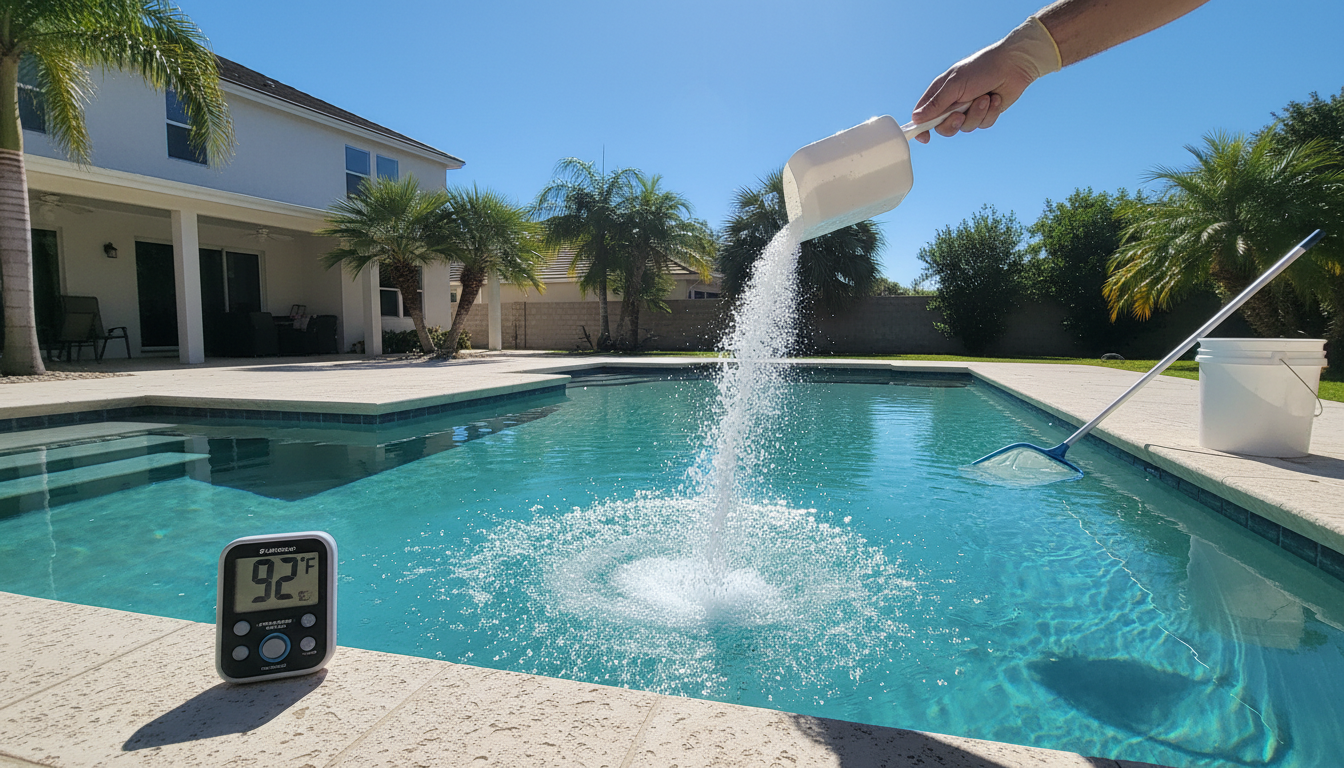
You test your water on a scorching afternoon, see zero CYA and almost no chlorine, and reach for the shock. But something feels off: you treated this pool two days ago. If you have been watching your chlorine disappear almost overnight with no CYA protection in 90-plus-degree heat, you are dealing with one of the most frustrating combinations in pool care.
Here is the direct answer: in a 20,000-gallon outdoor pool with CYA at zero and water temperature above 90°F, you need approximately 4 lbs of trichlor shock to push free chlorine to the 10 ppm breakpoint dose. But that number alone will not save you. Without stabilizer in the water, the sun will burn off most of that chlorine within 1 to 2 hours. This article walks through the correct dose, the UV math behind why CYA matters so much at high temperatures, how to add stabilizer at the same time, and the timing that actually makes the shock stick.
Why Zero CYA and 90°F Is Such a Dangerous Combination
Cyanuric acid (CYA) acts as a sunscreen for free chlorine. It forms a temporary bond with hypochlorous acid (the active sanitizing form of chlorine), shielding it from UV photodegradation. Without CYA, direct sunlight degrades free chlorine at an aggressive rate. At 90°F and above, that degradation accelerates further because warm water speeds up photochemical reactions.
Studies from pool chemistry researchers show that in an unprotected outdoor pool with no CYA, UV radiation can destroy roughly 75 to 90 percent of free chlorine within the first 2 hours of direct sun exposure. In practical terms: you add a full shock dose in the morning, and by lunchtime the pool is essentially unprotected again. That is not a dosing failure. It is a stabilizer failure.
If you want to understand the full picture of when stabilizer helps and when it becomes the problem, the guide on pool stabilizer: when you need it and when it’s already too high explains both sides of that balance clearly.
How Much Trichlor Shock Does a 20,000-Gallon Pool Need?
Trichlor shock products typically contain 87 to 90 percent available chlorine. Most manufacturers rate their product to raise chlorine by about 1 ppm per 0.5 oz per 10,000 gallons (check your label, as this varies slightly by brand concentration). To hit a breakpoint shock level of 10 ppm in a 20,000-gallon pool, here is the math:
- Target dose: 10 ppm free chlorine in 20,000 gallons
- Chlorine needed: 10 ppm x 20,000 gallons = 200,000 ppm-gallons of active chlorine
- Typical trichlor product rate: 1 lb raises approximately 5 ppm per 10,000 gallons (at 90% available chlorine)
- Dose for 20,000 gallons to 10 ppm: 4 lbs
That 4-lb figure is the baseline. If your current free chlorine reads 1 ppm, you subtract that from your 10 ppm target and dose for 9 ppm instead. In that case, 3.6 lbs (round to 3.5 or 4 depending on your measurement tools) is the adjusted number. Always test before you dose, not after.
One thing worth flagging: trichlor is a slow-dissolving granular or tablet form of chlorine. If you are using trichlor granules for shock rather than tablets, pre-dissolve them in a bucket of pool water before broadcasting them around the perimeter. Never pour dry trichlor granules directly onto a vinyl liner or painted surface, since the concentrated acid can bleach or damage the finish on contact.
The CYA Side Effect You Need to Plan For
Every pound of trichlor you add also raises your CYA level. Trichlor is about 57 percent cyanuric acid by weight, and that CYA stays in the water after the chlorine is consumed. The math works out to roughly 6 ppm of CYA per pound per 10,000 gallons.
So in your 20,000-gallon pool, that 4-lb shock treatment adds approximately 12 ppm of CYA. Starting from zero, you end up near 12 ppm after one shock. That is still far below the 30 to 50 ppm range you need for meaningful UV protection in summer heat. You will need to add stabilizer separately to get where you need to be.
Adding Stabilizer at the Same Time
The right move when CYA is zero is to add cyanuric acid (stabilizer granules) alongside your shock, not weeks later. For a 20,000-gallon pool, raising CYA from 0 to 40 ppm requires about 5.3 lbs of pure cyanuric acid (stabilizer dissolves slowly, so plan for 24 to 48 hours before your test reads accurate). Add it to a skimmer sock or pre-dissolve it in warm water and feed it through the skimmer with the pump running.
Targeting 40 ppm in 90°F-plus weather is reasonable. It provides a meaningful chlorine half-life extension without pushing CYA so high that it over-stabilizes your water and makes chlorine sluggish. At 80 ppm and above, stabilizer starts blunting chlorine’s effectiveness even though it technically protects it from UV. Forty to 50 ppm is the practical sweet spot for a hot outdoor pool.
Timing: When to Add the Shock
With zero CYA and temperatures above 90°F, timing is everything. Shocking in the afternoon or morning guarantees that UV will be competing with your treatment the whole time. Shock after sundown. Here is a simple sequence that works:
- Test water at dusk: Confirm free chlorine level, pH (target 7.2 to 7.4 before shocking), and CYA.
- Add stabilizer first: Feed cyanuric acid through the skimmer with the pump running. Allow 30 minutes of circulation.
- Pre-dissolve trichlor shock: Mix granules into a bucket of pool water, stir until dissolved, then slowly pour around the pool perimeter.
- Run the pump overnight: Circulate for at least 8 hours to distribute the chlorine evenly.
- Test again at sunrise: If free chlorine is still at or above 2 ppm and water is clear, the shock held. If it has dropped to near zero, you likely lost it to overnight demand (algae, organics) and need a second round.
Why 8 hours overnight? Because that window keeps the chlorine working in the absence of UV destruction. A pool that holds chlorine through the night is a pool where the shock actually did its job. One that reads zero at sunrise lost the battle to organic load, not sunlight, which tells you to look for algae or heavy swimmer contamination driving the demand up.
If your shock keeps failing even when you apply it correctly, the deeper issue might be chlorine demand or application error. The post on pool shock is failing you: here’s what you’re doing wrong covers the most common reasons a shock treatment does not take hold.
Quick Reference: Dose Summary for a 20,000-Gallon Pool at Zero CYA
| Chemical | Target | Dose for 20,000 Gallons | Notes |
|---|---|---|---|
| Trichlor shock (90% available Cl) | 10 ppm free chlorine | 4 lbs | Pre-dissolve; add after dark |
| Cyanuric acid (stabilizer) | 40 ppm CYA | 5.3 lbs | Add to skimmer; 24-48 hrs to fully dissolve |
| pH adjustment (if needed) | 7.2 to 7.4 | Dose based on current reading | Lower pH before shocking for best results |
These numbers assume a clean pool with normal organic load. If the water is green or cloudy, your chlorine demand will be significantly higher and you may need to repeat the shock treatment. Some pool owners use AquaDoc trichlor shock granules for this kind of situation because the product is formulated for rapid dissolution, which matters when you are working quickly at night.
Common Mistakes That Waste Your Shock Dose
- Shocking in daylight: Even one hour of midday sun on unprotected chlorine in a zero-CYA pool can cut your effective dose by half or more.
- Skipping the pH check: Trichlor is acidic (pH around 2.8 to 3.0). Adding 4 lbs will push pool pH down. If you start at pH 7.8 or above, trichlor will correct it somewhat. If you start at 7.2, test after treatment and adjust upward if needed.
- Not addressing CYA at all: A single shock session using trichlor only adds 12 ppm of CYA. That is not enough protection for ongoing summer use. Add stabilizer separately and verify with a test strip or drop test.
- Pouring granules in one spot: Concentrated trichlor sitting on the bottom creates a low-pH hot spot. Always pre-dissolve or broadcast while walking around the perimeter.
- Expecting one treatment to fix heavy algae: Algae-cloudy water has a high chlorine demand. In those cases, a single shock dose gets consumed fighting the bloom before it can sanitize the water. You may need 2 to 3 consecutive treatments.
Frequently Asked Questions
How much trichlor shock do I add to a 20,000-gallon pool?
To reach a 10 ppm breakpoint shock dose in a 20,000-gallon pool, use approximately 4 lbs of trichlor shock rated at 87 to 90 percent available chlorine. If your current free chlorine is already above zero, subtract that reading from 10 ppm and dose for the difference. Always verify the product label’s ppm-per-pound rate before pouring.
What happens if I shock a pool with zero CYA in hot weather?
With no CYA and water above 90°F, UV radiation destroys unprotected free chlorine within 1 to 2 hours of sun exposure. You can apply a full shock dose and have essentially zero chlorine remaining by midday. Always add stabilizer to reach at least 30 to 40 ppm CYA before relying on shock in direct summer sun.
Will trichlor shock raise my CYA level?
Yes. Trichlor contains about 57 percent cyanuric acid by weight, contributing roughly 6 ppm of CYA per pound per 10,000 gallons. In a 20,000-gallon pool, a 4-lb shock adds approximately 12 ppm of CYA. That helps, but you still need to add stabilizer separately to reach a protective 40 ppm level.
Should I shock my pool during the day or at night in 90°F summer weather?
Always shock after sundown when CYA is low and temperatures are high. Shocking at night gives the chlorine 8 or more hours to circulate and sanitize before UV exposure begins the next morning. Daytime shocking with zero CYA in summer heat wastes a significant portion of your treatment before it can work.
What is the minimum CYA level to protect chlorine when the water is above 90°F?
Aim for at least 40 ppm of CYA when outdoor water temperatures exceed 90°F. At that level, the stabilizer extends the effective half-life of free chlorine from under 2 hours to roughly 6 to 8 hours of sun exposure. Going above 80 ppm causes a different problem: over-stabilization that makes chlorine sluggish even at correct ppm readings.
The bottom line: shock a 20,000-gallon pool at zero CYA with 4 lbs of trichlor after dark, but add 5.3 lbs of cyanuric acid at the same time or your chlorine will not survive the next sunny morning.
Một điểm cộng lớn của cricfy là giao diện đẹp mắt nhưng vẫn rất dễ thao tác đối với người mới. TONY10-30