
Above-Ground Pool Cover Pump: How to Drain It Without Collapsing the Walls
Running a cover pump on an above-ground pool the wrong way can bow the walls inward or shift the liner - sometimes permanently. This guide explains exactly how to drain standing water from your winter cover safely, including pump placement, flow rate limits, and the one timing mistake that causes most wall damage.

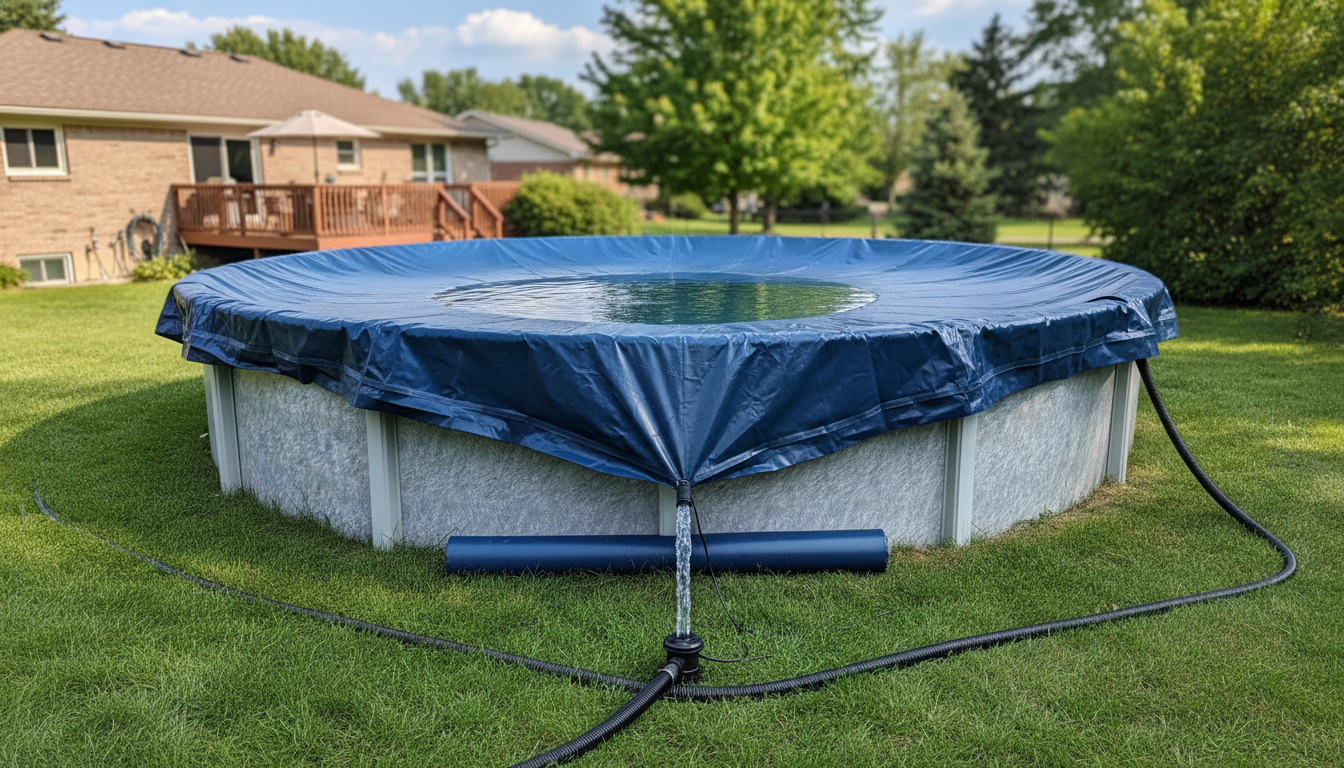
Above-Ground Pool Cover Pump: How to Drain It Without Collapsing the Walls
You close the pool, snap the cover on, and feel pretty good about it – until the first big rainstorm drops six inches of rain and you walk out to find a swimming pool sitting on top of your pool cover. Getting that water off sounds simple, but on an above-ground pool it carries a real risk that flat inground covers don’t: if you pull water off the surface faster than the pressure inside and outside the pool walls can equalize, those walls can bow inward. In bad cases, they buckle permanently.
The safe approach is to use a low-flow cover pump rated between 300 and 500 GPH, place it at the lowest point of the cover away from the walls, and never let the pool’s own water level drop more than 6 inches below the skimmer opening during the process. This article walks through exactly how to do that: the right pump specs, safe placement, a step-by-step process, and the mistakes that cause wall damage so you can skip all of them.
Why Above-Ground Pool Walls Are Vulnerable During Cover Pumping
An above-ground pool wall is a thin steel or resin panel – typically 48 to 54 inches tall and anywhere from 0.03 to 0.06 inches thick. What keeps it standing upright is not the wall itself but the water pressure pushing outward from inside. That outward pressure and the resistance of the surrounding ground create a balance. When you drain water off the cover quickly, the weight on top of the cover shifts, and if the cover pulls inward toward the pool, it puts lateral stress on the coping rail and top rails that hold everything together. Worse, if your pool water level has dropped significantly over the winter (from evaporation or a slow leak), there is less internal pressure to push back – and the walls become much easier to deform.
As pool service professionals at A-1 Pools and Spas explain, standing water on a cover also adds enormous cumulative weight that stresses the entire pool structure over time. Getting it off quickly matters – but getting it off the right way matters more.
Choosing the Right Cover Pump for an Above-Ground Pool
Not every submersible pump belongs on a pool cover. A standard utility pump or sump pump can push 1,500 GPH or more, which sounds efficient until the cover drains unevenly, the center drops, and the edges pull hard against the coping rails. For above-ground pools, you want a dedicated cover pump with the following specs:
- Flow Rate: 300 to 500 GPH. This is slow enough that water drains gradually and evenly without creating sudden pressure changes across the cover surface.
- Automatic Float Switch: A float switch cuts the pump off when the water level drops to about 1/8 inch. Without it, the pump runs dry, burns out the motor, and can start spinning in place on a dry cover, creating friction heat.
- Low-Profile Design: Cover pumps sit flat on the cover surface. A tall cylindrical pump can tip over on a sloped or rippled cover and suck air instead of water.
- Discharge Hose Length: You need at least 25 feet to route the hose away from the pool completely. Discharging onto the pool deck right next to the pool just sends water back under the cover.
AquaDoc makes a winterizing chemical kit that pairs with cover care, and plenty of pool owners pick up a proper float-switch cover pump at the same time they grab their closing chemicals – it’s the kind of thing you want ready before the first freeze, not after.
Step-by-Step: How to Pump Water Off an Above-Ground Pool Cover Safely
- Check the pool water level first. Before you touch the cover pump, look at where your pool water sits. It should be no more than 6 inches below the skimmer opening. If it has dropped further over the winter – say, 12 inches or more – the reduced internal pressure makes the walls vulnerable. Add water to bring the level back up before pumping the cover.
- Find the low point of the cover. Walk around the pool and locate where water has pooled deepest. On most round above-ground pools, that is somewhere near the center, especially if a pool pillow has deflated. That is where the pump goes.
- Place the pump flat at the center low point, not near the wall. Keep the pump body at least 18 inches from any wall. If it sits against the wall, the discharge hose angle can press the cover tight against the coping rail on one side as it drains, creating uneven tension. Set it in the true lowest spot and let the water come to it.
- Route the discharge hose clear of the pool deck. Run the hose at least 10 feet away from the pool before it discharges. Water draining onto the deck can seep back under the cover edge or, in freezing weather, create ice under the pool base.
- Plug in and monitor every 30 minutes. Do not walk away for hours. Check progress every half hour. If the pump is running but water is no longer moving, the float switch may have triggered too early, or the hose may be kinked. A kinked hose causes the pump to work against itself and can burn out the motor in under an hour.
- Stop when about 1/4 inch of water remains. The float switch should handle this, but if yours is manual, stop before the cover is bone dry. A completely dry cover with a pump sitting on it can slide around and potentially pull the cover edge out from under the coping.
- Do not remove the cover immediately after pumping. Let the cover settle for 30 minutes before walking it or folding it back. The cover is heavier than it looks when wet, and sudden movement can drag the coping rail.
How Much Water Are You Actually Dealing With?
Here is a worked example so the numbers make sense. Say you have a 24-foot round above-ground pool with a standard tarp-style winter cover. The cover area is roughly 452 square feet. After a storm that drops 2 inches of rain, you have approximately 452 square feet multiplied by 0.167 feet of water depth, which equals about 75 cubic feet of water – around 565 gallons sitting on that cover. At 300 GPH, your cover pump clears that in about 1 hour 50 minutes. At 500 GPH, under 70 minutes. That is entirely manageable without rushing, which is exactly why the slow-and-steady pump wins here. Star Water Systems notes that consistent, routine pumping after each storm prevents the kind of heavy accumulation that stresses covers and walls most severely.
Common Mistakes That Lead to Wall Damage
Most above-ground pool wall collapses from cover pumping come down to a handful of avoidable errors. A-1 Pool Fun’s guide on tarp-style covers points out that letting water accumulate for weeks before pumping is one of the biggest contributors to structural stress. Here are the rest:
- Using too powerful a pump: A 1,500 GPH sump pump drains the cover surface unevenly and fast, pulling the cover taut in one direction and pressing hard against the wall on the low side.
- Letting pool water get too low first: If the pool has lost 10 to 12 inches of water through winter evaporation and you add cover pump stress on top, the walls have almost nothing pushing back from the inside.
- Placing the pump against the wall: The hose weight pulls the cover diagonally toward the discharge point. Over several hours, that constant tension pries at the top rail connection.
- Ignoring the hose direction: A discharge hose that loops back toward the pool and discharges near the base can undermine the pool’s bottom track in freeze-thaw cycles.
- Waiting too long between pumpings: Clarks Pools explains that a sinking, waterlogged cover pulls down and inward simultaneously, which is the exact combination that bows above-ground walls. Check the cover after every significant rain and pump when you hit 2 inches of standing water.
What to Do If the Cover Has Already Sunk Into the Pool
If you come out and the cover has already sunk a foot into the water and is sitting on the pool floor or the pool pillow, stop and do not yank it. A cover loaded with water can weigh several hundred pounds. Pumping it out while it is partially submerged means the pump intake will start pulling pool water instead of cover water once the cover water is gone – and that drops the pool level fast. Instead, use the cover pump to remove as much surface water as possible from any areas still above the pool waterline, then check the pool water level before going further. If water has dropped more than 6 inches, add water before pulling the cover. For a deeper look at first-season setup decisions that affect how well your cover seats, the Above-Ground Pool Setup: A Realistic First-Timer’s Guide covers how top rail fit and coping integrity affect everything downstream, including winter cover performance.
Frequently Asked Questions
Can a cover pump collapse the walls of an above-ground pool?
Yes, it can if you drain the cover water faster than the pool water can equalize pressure, or if the pool’s own water level has already dropped significantly. Keep pump output below 300 to 500 GPH and confirm the pool water level is no more than 6 inches below the skimmer before you start pumping. If your pool has lost more water than that over the winter, top it off first. If you’re ever unsure how chemicals and water levels interact during the off-season, the Above-Ground Pool Chemical Dos and Don’ts guide is a useful reference.
Where should I place the cover pump on an above-ground pool cover?
Place the pump at the lowest point of the cover surface, typically near the center, and keep it at least 18 inches from any wall. Setting the pump directly against the wall causes the discharge hose to pull the cover sideways, creating uneven tension on the coping rail and top rail connections over time.
How long does it take to pump water off a pool cover?
A 300 to 500 GPH cover pump clears a typical 24-foot round above-ground cover after a 2-inch rain in roughly 70 to 110 minutes. Check the pump every 30 minutes so it does not run dry once the water is gone – running dry with no float switch protection burns out the motor quickly, often within an hour.
What happens if I leave standing water on my above-ground pool cover all winter?
A single inch of water over a 24-foot round cover is approximately 235 gallons, which weighs close to 2,000 lbs. That sustained weight stretches the cover, fatigues the stitching and seams, and pulls inward on the coping rail. As Pool Guard USA notes, standing cover water also creates a serious drowning hazard for children and pets. Pump it off whenever accumulation reaches 2 inches.
Do I need a special pump for an above-ground pool cover, or will any submersible pump work?
Use a dedicated cover pump with a built-in float switch rated at 300 to 500 GPH. Standard utility or sump pumps move 1,000 GPH or more, which is fast enough to drain the cover unevenly and stress the wall on one side. The automatic float switch is not optional: it prevents the pump from running dry when the surface water is gone.
The bottom line: use a low-flow cover pump with a float switch, set it at the cover’s lowest point well away from the walls, and pump after every significant rainfall rather than letting water build up all winter. That one habit is what keeps the walls straight season after season.