Trichlor Shock Dose for a Green 20,000-Gallon Saltwater Pool at CYA 60 ppm
Green algae in a saltwater pool is frustrating enough on its own. Add a CYA level of 60 ppm and the dosing math gets more complicated fast. This post gives you the exact trichlor amounts, explains the CYA trap you need to avoid, and walks you through the full kill process step by step.

Trichlor Shock Dose for a Green 20,000-Gallon Saltwater Pool at CYA 60 ppm
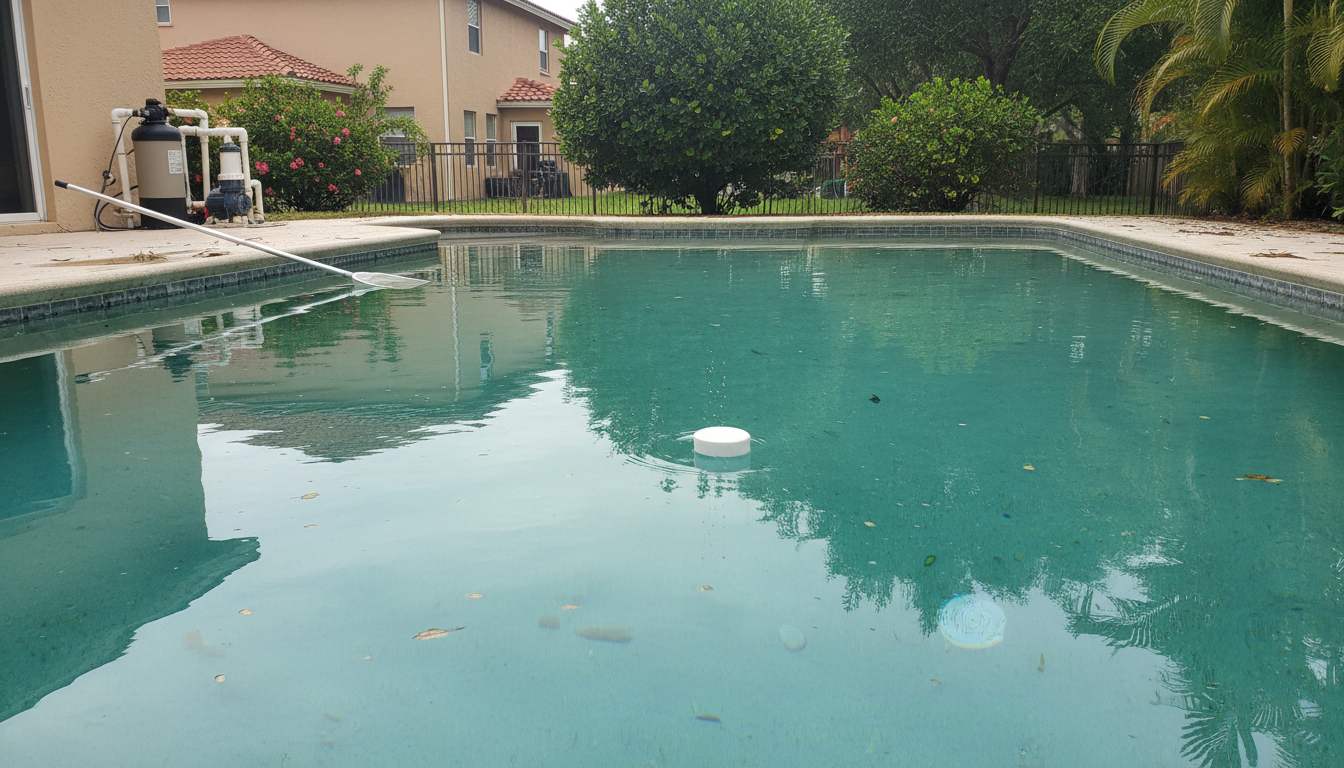
You look out at your saltwater pool and the water has gone that unmistakable murky green, the kind that happens fast when the conditions line up against you. If your CYA is already sitting at 60 ppm, you might be wondering whether the shock you add will even do anything.
Here is the direct answer: to kill green algae in a 20,000-gallon saltwater pool with CYA at 60 ppm, you need to raise free chlorine to at least 24 ppm, which takes roughly 10 lbs of granular trichlor shock added in stages, plus continuous filtration, aggressive brushing, and a follow-up plan for the CYA that the trichlor will add. This post walks through the exact math, the step-by-step treatment process, and the one problem that catches most saltwater pool owners off guard when they reach for trichlor.
Why CYA at 60 ppm Changes Everything
Free chlorine does not work at full strength on its own. CYA (cyanuric acid, also called stabilizer) bonds with chlorine molecules in the water and buffers them against UV destruction, which is useful up to a point. But the same buffering effect reduces the sanitizing punch of your free chlorine. The relationship is roughly linear: the higher the CYA, the higher your free chlorine must climb before it has enough active, unbound chlorine to actually kill algae and bacteria.
The standard benchmark used by pool chemistry references is that your shock-level free chlorine target should be at least 40% of your CYA reading. At CYA 60 ppm, that works out to 24 ppm of free chlorine. A normal maintenance dose of 3 to 5 ppm will not touch an established algae bloom at that stabilizer level. You need to go much higher, and that is why the dosing math here looks more aggressive than what a basic shock bag label suggests. If you want a deeper look at how CYA and shock interact, the post on Pool Shock Is Failing You: Here’s What You’re Doing Wrong covers the common mistakes in detail.
How Much Trichlor Shock for a 20,000-Gallon Pool
Granular trichlor shock typically runs 90% available chlorine by weight. One pound added to 10,000 gallons raises free chlorine by approximately 9 ppm. In a 20,000-gallon pool, that same pound raises it by roughly 4.5 ppm.
Here is the worked example. Your pool holds 20,000 gallons. CYA is 60 ppm, so your target free chlorine is 24 ppm. Your current free chlorine, in a green pool, is probably close to zero. You need to add approximately 24 ppm of chlorine to the full volume of water.
- Target free chlorine: 24 ppm
- Current free chlorine: approximately 0 ppm
- Chlorine needed: 24 ppm across 20,000 gallons
- Trichlor at 90% available chlorine: roughly 4.5 ppm per pound in 20,000 gallons
- Pounds required: 24 divided by 4.5 equals approximately 5.3 lbs to hit target
So why did the opening say 10 lbs? Because algae consumes chlorine aggressively as it dies. The first 5 to 6 lbs will be partially eaten by the bloom before the water ever reaches 24 ppm on a test strip. Plan on 8 to 10 lbs total, added in two or three rounds over 24 to 48 hours, testing free chlorine every 8 hours and redosing until the reading holds above 10 ppm for a full 8-hour cycle without dropping. That holding pattern tells you the algae is dead and demand has dropped.
The CYA Problem You Need to Plan For
This is the part that catches saltwater pool owners off guard. Every pound of trichlor also adds stabilizer. Specifically, trichlor is about 57% CYA by weight, which works out to roughly 3 ppm of CYA per pound in a 20,000-gallon pool.
If you add 10 lbs of trichlor over the course of this treatment, you will add approximately 30 ppm of CYA on top of your existing 60 ppm. That puts you near 90 ppm, well above the recommended range of 30 to 50 ppm for most pools and above the 70 to 80 ppm upper limit that many saltwater pool manufacturers recommend specifically because high CYA degrades your salt cell’s effective output.
At 90 ppm CYA, partial draining is the only real fix. Plan to drain and refill 20 to 30% of your pool volume (roughly 4,000 to 6,000 gallons for a 20,000-gallon pool) after the algae is gone, then retest CYA before resuming normal salt cell operation. This is not an emergency, but it is a step you should budget for before you start treatment.
Step-by-Step Treatment Process
- Step 1: Test your water first. Confirm free chlorine, CYA, pH, and alkalinity before adding anything. pH between 7.2 and 7.4 makes shock more effective. If pH is above 7.6, dose muriatic acid first and wait 2 hours.
- Step 2: Brush the entire pool. Brush walls, floor, and any steps aggressively before adding shock. Algae clings to surfaces and the brushing breaks the biofilm, exposing it to the chlorine you are about to add.
- Step 3: Add the first dose at dusk. Dissolve 4 lbs of granular trichlor in a bucket of pool water (always add chemical to water, not water to chemical) and distribute around the perimeter with the pump running. Shocking at dusk prevents UV from burning off the chlorine before it can work.
- Step 4: Run the filter continuously. Keep your pump and filter running 24 hours a day through the entire treatment. Backwash or clean the filter every 24 hours during this period because dying algae loads it fast.
- Step 5: Test and redose after 8 hours. If free chlorine has dropped below 10 ppm, add another 2 to 3 lbs. Repeat until free chlorine holds above 10 ppm for a full overnight cycle.
- Step 6: Add an algaecide as a finisher. Once free chlorine is stable and the water is clearing, a copper-free algaecide rated for green algae helps mop up any remaining cells and reduces the chance of a rebound bloom.
- Step 7: Vacuum to waste. Dead algae will cloud the water and settle as sediment. Vacuum to the waste port (bypassing the filter) so you are not recirculating dead material.
- Step 8: Retest everything and plan the partial drain. After the pool clears, test CYA. If it is above 80 ppm, drain and refill 25% of the pool volume before returning the salt cell to normal operation.
Why Trichlor and Not Cal Hypo for a Saltwater Pool?
Calcium hypochlorite (cal hypo) does not raise CYA, which makes it the cleaner chemical choice for a saltwater pool where stabilizer is already at 60 ppm. Liquid chlorine (sodium hypochlorite) is even simpler: no CYA addition, no calcium addition, easy to dose in large quantities. If you have easy access to either of those options, they are genuinely worth considering for this situation specifically because they let you shock hard without compounding the CYA problem.
That said, trichlor granules are what most pool owners have on hand, and they work perfectly well for a one-time algae knockdown if you go in with eyes open about the CYA consequence and plan the partial drain afterward. AquaDoc makes a granular trichlor product that pool owners use for exactly this kind of emergency treatment, and the label gives clear per-10,000-gallon dosing guidance so the math stays simple even when you are adding multiple rounds.
Understanding the difference between algae types also matters here. Green algae is the easiest to kill with chlorine shock, but if patches on your walls or floor are yellow or black, the treatment intensity and method shift. The guide on Pool Algae: Green, Yellow, and Black breaks down what each type requires so you can confirm you are dealing with the right problem before you spend money on chemicals.
Comparison: Shock Options for a Saltwater Pool With High CYA
| Shock Type | Available Chlorine | Adds CYA? | Adds Calcium? | Best For |
|---|---|---|---|---|
| Trichlor granules | 90% | Yes, ~3 ppm per lb per 20k gal | No | Emergency use when it is all you have |
| Calcium hypochlorite | 65 to 78% | No | Yes | High-CYA pools without calcium concerns |
| Liquid chlorine (12.5%) | 12.5% | No | No | Cleanest option for saltwater pools |
| Dichlor granules | 62% | Yes, more per pound than trichlor | No | Not recommended at CYA 60 ppm |
The table makes the trade-offs obvious. If your CYA is already elevated, adding more through repeated trichlor or dichlor doses compounds the problem with every treatment. Liquid chlorine and cal hypo let you shock as hard as you need to without the stabilizer penalty, which is why they are the preferred tools in saltwater pool chemistry. When you are using trichlor as a one-time fix, the key is knowing the CYA math in advance and committing to the partial drain that follows.
Frequently Asked Questions
How much trichlor shock do I need for a 20,000-gallon pool with green algae?
Plan on 8 to 10 lbs of granular trichlor (90% available chlorine) added in stages over 24 to 48 hours. The first dose of 4 lbs will largely be consumed by the algae bloom itself before the water reaches your target free chlorine level of 24 ppm. Keep testing every 8 hours and redosing until the reading holds above 10 ppm for a full cycle.
Can I use trichlor shock in a saltwater pool?
Yes, but only as a temporary emergency measure. Trichlor adds roughly 3 ppm of CYA per pound in a 20,000-gallon pool, so a 10-lb algae treatment will push your existing 60 ppm CYA to approximately 90 ppm. At that level, your salt cell loses effective output and partial draining becomes necessary. For regular shocking, liquid chlorine is a cleaner fit for saltwater systems.
What free chlorine level do I need to kill green algae at CYA 60 ppm?
At CYA 60 ppm, you need a minimum free chlorine level of 24 ppm to achieve a true algae-killing shock. The guideline is that shock-level free chlorine should equal at least 40% of your CYA reading. A standard maintenance dose of 3 to 5 ppm will not kill an active bloom at this stabilizer level.
Why is my saltwater pool green even though the salt cell is running?
A salt cell generates chlorine at a low, steady rate designed for maintenance, not for overwhelming an active bloom. When algae has taken hold, chlorine demand spikes far above what the cell can produce in real time. High CYA at 60 ppm also reduces the sanitizing power of whatever chlorine the cell does generate, so the bloom wins the race until you add a large manual dose of supplemental shock.
Will adding trichlor shock raise my CYA even more?
Yes, and you need to account for this before you start. Each pound of trichlor adds approximately 3 ppm of CYA to a 20,000-gallon pool. Adding 10 lbs raises CYA by about 30 ppm, which would take your existing 60 ppm up to roughly 90 ppm. After the algae is dead and the water has cleared, drain and refill 25% of the pool volume (about 5,000 gallons) to bring CYA back down into the 30 to 50 ppm target range before resuming normal salt cell operation.
When CYA is at 60 ppm and your saltwater pool has gone green, you need roughly 10 lbs of trichlor shock added in stages to hit the 24 ppm free chlorine threshold that actually kills algae at that stabilizer level. Just go in with a plan for the CYA those pounds will add, and schedule the partial drain before you close the chemical bucket.