Dark Quartz Replaster Cost for a 20,000-Gallon Gunite Pool in a Cold Climate
Replastering a 20,000-gallon gunite pool with a dark quartz finish in a cold climate runs $8,000 to $14,500 all in, depending on surface prep, timing, and regional labor rates. This post breaks down every cost layer, explains why cold-climate pools cost more than average, and walks you through a real-numbers example so you know exactly what to budget.

Dark Quartz Replaster Cost for a 20,000-Gallon Gunite Pool in a Cold Climate
You finally pulled the trigger on a dark quartz finish, and now every contractor quote you get looks slightly different and nobody is explaining the gap. If you own a 20,000-gallon gunite pool in a climate that freezes every winter, you have a specific cost situation that generic replaster guides never quite cover.
Replastering a 20,000-gallon gunite pool with a dark quartz finish in a cold climate typically costs $8,000 to $14,500 all in. The base material and labor account for most of that, but cold-climate prep work, a shorter scheduling window, and the premium for colored aggregate all push the number higher than a standard white plaster job in a mild region. This article walks through every cost layer, shows you a real worked example, and flags the mistakes that cause owners to go over budget.
What You Are Actually Paying For
A replaster quote is not just a bucket of quartz and a few hours of labor. The total cost breaks into four distinct layers, and understanding them is how you evaluate whether a quote is fair or padded.
- Drain and prep: The pool must be fully drained, old plaster chipped or acid-washed off, and the shell inspected for cracks or hollow spots. Prep labor runs $800 to $1,800 on a 20,000-gallon gunite shell, depending on how much deterioration exists.
- Structural repairs: Cracks, delaminated sections, and corroded rebar add cost on a per-repair basis. Budget $200 to $600 per significant crack repair and $500 to $1,500 if rebar needs to be exposed and treated. Cold-climate pools crack more from freeze-thaw cycles, so this line item is often higher than in warm regions.
- Dark quartz material: Quartz aggregate finishes cost $3.50 to $5.50 per square foot installed. A 20,000-gallon gunite pool typically has 900 to 1,100 square feet of plaster surface. At the midpoint of 1,000 square feet, that puts material and application labor at $3,500 to $5,500 for the finish coat alone.
- Cold-climate premium: Contractors in freeze zones charge a scheduling premium of $300 to $800 because the application window is narrow, mobilization is harder, and they sometimes need to tent or heat the work area to keep the substrate above 50°F during curing.
- Startup chemicals: New plaster requires aggressive water balancing for the first 30 days. Plan on $150 to $400 in chemicals during the startup period, including pH adjusters, calcium hardness increaser, and a startup enzyme or sequestrant.
Worked Example: 20,000-Gallon Gunite Pool in Zone 6
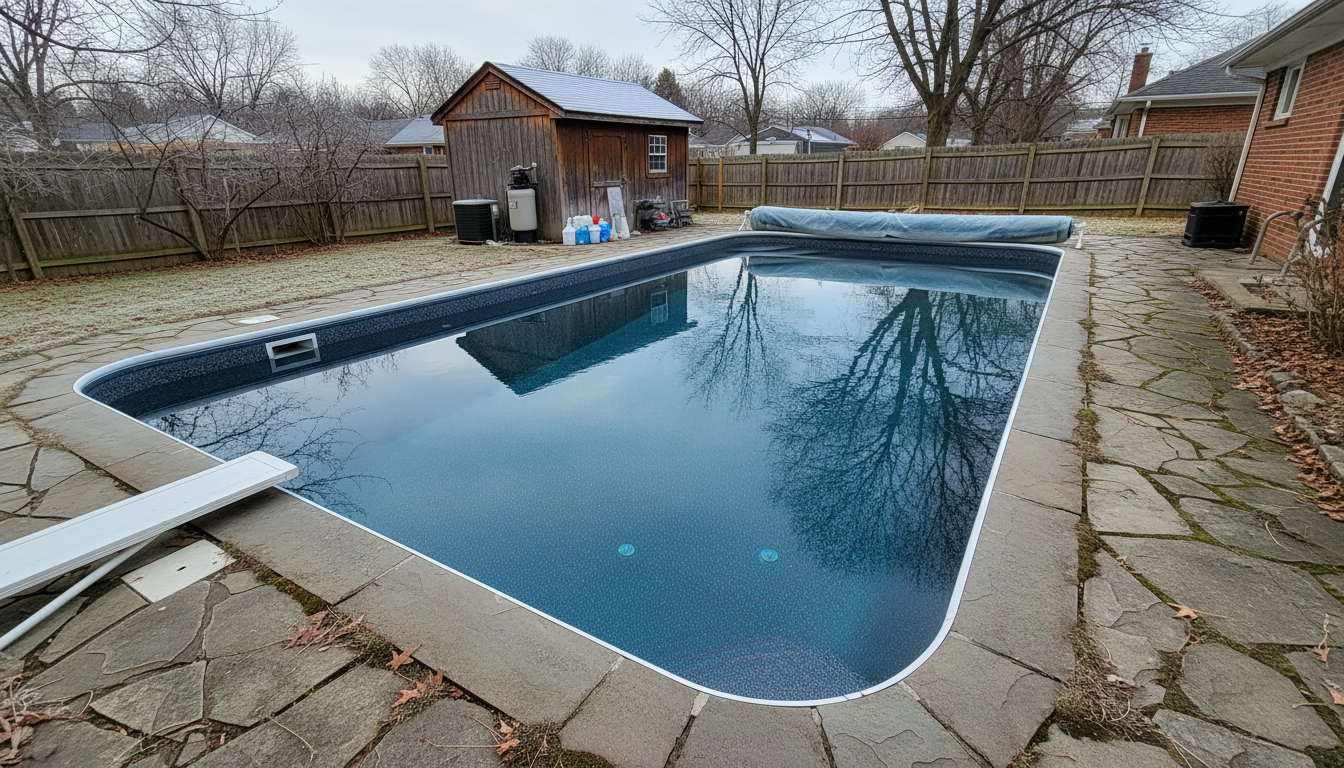
Say you own a rectangular 20,000-gallon gunite pool in a Zone 6 climate (think Minnesota, Wisconsin, or upstate New York) with a surface area of about 1,000 square feet. The shell has three minor cracks from last winter and the existing plaster is 18 years old, so the prep work is on the heavier side.
- Drain and chip old plaster: $1,400
- Crack repairs (three cracks): $750
- Dark quartz finish at $4.50 per square foot: $4,500
- Cold-climate scheduling premium: $600
- Startup chemicals: $300
- Total estimate: $7,550 to $9,100 depending on final crack count and material color choice
If the same pool also needs waterline tile replaced, add $1,200 to $2,500 for that work. Tile replacement is often bundled with replaster because the pool is already drained and the labor overlap saves money. That is how a quote can land at $12,000 or higher without anyone overcharging you.
Why Dark Quartz Specifically Costs More in Cold Climates
Standard white plaster is forgiving. Dark quartz aggregate is not. The color must be blended consistently across every bag and every section of the pool, because an uneven mix is painfully obvious under the water once you fill. That blending skill costs more, and experienced crews that specialize in colored aggregate are in shorter supply in northern markets.
There is also a heat absorption factor worth knowing. Dark surfaces absorb more solar energy, which slightly increases water temperature but also accelerates surface stress during freeze-thaw cycles if the pool is left wet and unprotected. Proper winterization (full drain-down, antifreeze in the lines, solid or safety cover) is non-negotiable with a dark finish in a cold climate, because surface spalling from a freeze is not covered under most installer warranties.
Color uniformity is also affected by water chemistry during startup. Dark quartz is more sensitive to calcium carbonate scaling and to acid etching than white plaster, so keeping pH between 7.4 and 7.6 and calcium hardness between 200 and 400 ppm during the first 30 days is critical. AquaDoc makes a plaster startup kit specifically for the first 30 days after a new finish, which pool owners find useful for staying in range without testing every few hours.
Comparison: Dark Quartz vs Other Finish Options at This Size
| Finish Type | Cost per Sq Ft (Installed) | Total for 1,000 Sq Ft | Lifespan | Cold Climate Suitability |
|---|---|---|---|---|
| Standard White Plaster | $2.00 to $3.50 | $2,000 to $3,500 | 7 to 12 years | Good |
| White Quartz (Pebble-Style) | $3.00 to $4.50 | $3,000 to $4,500 | 15 to 20 years | Very Good |
| Dark Quartz Aggregate | $3.50 to $5.50 | $3,500 to $5,500 | 15 to 25 years | Good with proper winterization |
| Exposed Pebble (Pebble Tec style) | $5.00 to $7.00 | $5,000 to $7,000 | 20 to 30 years | Very Good |
Why These Differences Matter for Your Decision
Dark quartz sits in the middle of the price range but delivers close to the top-tier lifespan when it is properly applied and maintained. If you are comparing it to standard plaster, the extra $1,500 to $2,000 in upfront cost likely pays for itself by year 10 because you will not be replastering again at year 8 or 9. If you are comparing it to full exposed pebble, the savings are real but the aesthetic difference is also real: exposed pebble has a rougher texture that some swimmers dislike. For a rundown of how smaller pools price out with similar variables, the 12×24 inground pool replaster cost with a salt system breakdown shows how the same cost layers apply at a smaller scale.
Scheduling and Timing in a Cold Climate
The biggest mistake cold-climate owners make is scheduling too late in the season. Most plasterers in freeze zones will not start a quartz application after September 1 in a Zone 5 or 6 climate, because the finish needs at least six weeks of ambient temperatures above 50°F to cure properly before the pool closes for winter. Book your contractor in February or March for a May or June install date. Good plasterers in northern markets fill their calendar fast.
If you miss the spring window, your next realistic option is early fall, targeting a finish date no later than August 15 in Zone 5 and no later than September 1 in Zone 6. This gives the plaster roughly eight weeks before you close, which is the minimum most installers will accept for a warranty to remain valid.
Common Mistakes That Blow Up the Budget
- Skipping a pre-drain inspection: Owners who drain the pool and discover delamination or structural cracks mid-project face change orders of $500 to $2,000. Get a contractor to camera or tap-test the shell before you sign anything.
- Choosing color without wet samples: Dark quartz colors look dramatically different wet versus dry. Always ask to see a cured, wet sample before committing. A color change mid-project is not possible without starting over.
- Ignoring startup chemistry: Letting pH drift above 7.8 in the first 30 days can etch a dark quartz finish, leaving permanent light spots. This is the number one warranty voiding mistake.
- Bundling with the cheapest contractor: Colored aggregate finishes require experienced crews. A low bid from a contractor who primarily does white plaster can result in blotchy color that no amount of chemistry fixes.
Frequently Asked Questions
How much does it cost to replaster a 20,000-gallon gunite pool with dark quartz?
Expect to pay $8,000 to $14,500 for a 20,000-gallon gunite pool replastered with a dark quartz finish, including prep, material, and application labor. The wide range reflects surface condition, regional labor rates, and whether coping or tile work is bundled in. Cold climates push costs toward the top of that range because of the shorter installation window and added prep requirements.
Why does dark quartz cost more than standard white plaster?
Dark quartz aggregate costs $1.50 to $2.50 more per square foot than standard white plaster because the material itself is more expensive and the application requires more skill to blend color consistently. On a 20,000-gallon pool with roughly 1,000 square feet of surface area, that premium adds $1,500 to $2,500 to the total bill.
Does cold weather affect how long replaster takes to cure?
Yes. Plaster cures best between 50°F and 85°F, and cold water or air slows the hydration process. In climates where nights drop below 45°F, most plasterers require a minimum cure period of 28 days before closing the pool for winter, and some will not apply quartz finishes at all once ambient temperatures fall below 40°F.
How long does a dark quartz finish last in a freeze-thaw climate?
A properly applied dark quartz finish lasts 15 to 25 years even in freeze-thaw climates, provided the pool is correctly winterized every year and water chemistry is maintained in range. Pools left with imbalanced water or improper closing procedures can see surface damage in as few as 5 to 7 years regardless of finish type.
What is the best time of year to replaster a gunite pool in a cold climate?
Late spring through early summer is the optimal window in cold climates, giving the finish the longest possible cure time before the pool needs to be winterized. Some contractors also work in early fall if the job wraps up at least six weeks before the first hard freeze. Avoid scheduling replaster jobs in fall when nights are already below 50°F.
For a 20,000-gallon gunite pool with a dark quartz finish in a cold climate, budget $8,000 to $14,500, book early in the season, and treat the first 30 days of water chemistry as seriously as the installation itself. That combination is what makes a quartz finish last 20 years instead of 8.