Pebble Finish Pool Replaster Cost in High-Humidity Climates: What to Budget
Pebble finish replastering costs more in high-humidity climates than the national averages suggest. This guide breaks down real price ranges, the climate factors that push costs up, and what to watch for when budgeting your project.

Pebble Finish Pool Replaster Cost in High-Humidity Climates: What to Budget
You finally decide it’s time to resurface that pool, and then you get the first quote back and wonder if the contractor accidentally added an extra zero. Pebble finishes have a reputation for being expensive, and in a high-humidity climate that reputation is entirely earned. Before you call anyone else, it helps to know what’s actually driving that number.
Pebble finish pool replastering costs between $5,000 and $12,000 for a typical residential pool in most parts of the country. In high-humidity markets such as Florida, coastal Texas, Louisiana, and the Georgia coast, the realistic range shifts to $6,500 to $11,500 once climate-related prep work and regional demand are factored in. This article walks through what makes up that price, why humidity specifically pushes costs up, how pebble grades compare, and what you can negotiate before signing a contract.
What You’re Actually Paying For With a Pebble Finish
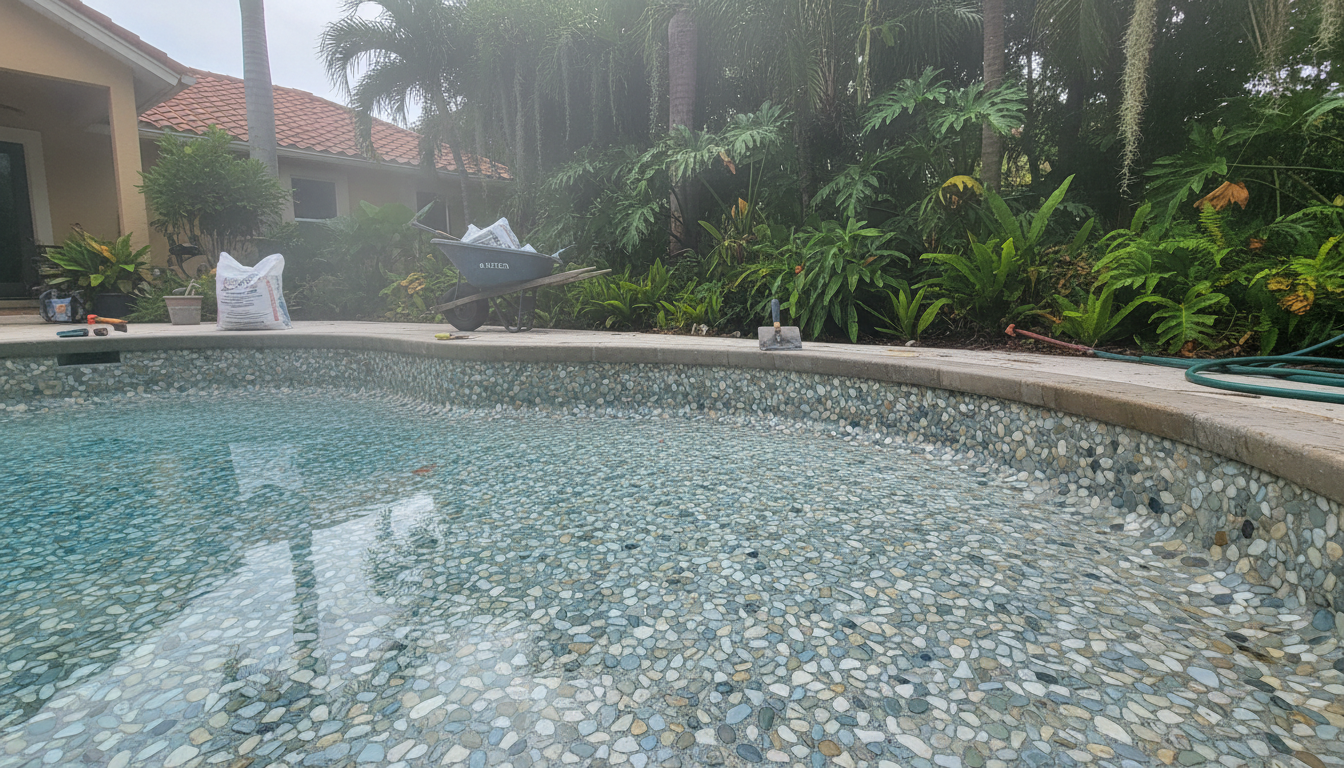
Pebble finish is not a single product. It’s a category covering small river pebbles, crushed quartz, glass beads, or a mix of those materials embedded in a white or colored plaster base. The most widely recognized brand name in the category is Pebble Tec, though several manufacturers offer comparable products. What they all share is a durable, textured surface that lasts significantly longer than standard white plaster.
A standard replaster job breaks down roughly like this:
- Draining and surface prep: $500 to $1,200, depending on pool size and how much chipping or acid washing the old surface needs.
- Bond coat application: $300 to $600. This is the scratch coat that the pebble mix bonds to. Skipping it or doing it thin is a leading cause of delamination.
- Pebble mix material: $2,500 to $5,500, depending on grade and color. Standard pebble costs less than premium glass-bead or jewel-finish blends.
- Labor: $1,500 to $3,500. Pebble application is time-sensitive and requires hand-finishing before the plaster sets.
- Acid wash and startup chemicals: $300 to $700, including the 28-day chemical startup protocol the finish requires.
For a deeper look at how pool size changes the cost math, the 12×24 inground pool replaster cost breakdown on this site walks through a salt system scenario with real numbers that apply directly here.
Why High-Humidity Climates Cost More
Humidity is not just an annoyance during the project. It actively affects curing, scheduling, and prep, all of which cost money.
- Slower curing windows: Pebble plaster cures through a chemical reaction that is sensitive to ambient moisture. In climates where relative humidity regularly sits above 70 percent during working hours, crews need to monitor conditions more closely and sometimes work earlier in the morning to beat afternoon humidity spikes.
- Extended surface prep: Existing plaster in humid climates absorbs moisture over time, and that moisture has to be managed before a new bond coat will adhere properly. Contractors often spend 20 to 30 percent more time on prep in high-humidity markets than in the desert Southwest.
- Afternoon thunderstorm scheduling: In Gulf Coast and Florida markets, contractors build buffer days into their schedules to account for afternoon convective storms. That dead time gets priced into the project.
- Slurry disposal regulations: Coastal and environmentally regulated areas often require contractors to haul away the old plaster slurry rather than discharge it. That disposal adds $200 to $600 to most jobs.
- Year-round demand: In cold-climate markets, the winter off-season creates a slow period that softens prices. In Florida or coastal Texas, pools are used year-round, contractor demand stays high all 12 months, and discounting is rare.
Florida-based pool contractors confirm this pattern. According to Professional Aquatic Services’ Florida pebble resurfacing guide, the combination of year-round demand and climate-related prep requirements consistently pushes final pricing above national averages. A similar picture emerges in South Florida specifically, where Epic Watershapes’ South Florida Pebble Tec cost breakdown puts the typical range at $8,000 to $14,000 for pools with any added complexity.
Pebble Finish Grades: How Your Choice Moves the Number
Not all pebble finishes cost the same, and the grade you choose has a bigger impact on the final bill than most homeowners expect. Here’s how the main options compare:
| Finish Type | Material Cost per Sq Ft | Typical Lifespan | Best For |
|---|---|---|---|
| Standard White Plaster | $4 to $6 | 7 to 12 years | Budget resurfacing |
| Quartz Aggregate | $6 to $9 | 10 to 18 years | Mid-range durability |
| River Pebble (standard) | $8 to $12 | 15 to 25 years | Longevity in warm climates |
| Glass Bead or Jewel Blend | $12 to $18 | 20 to 25 years | Aesthetics plus durability |
Why These Differences Matter in Humid Climates
In a hot, humid climate, standard white plaster deteriorates faster than the national average lifespan suggests. Algae staining, calcium scaling, and surface etching all accelerate in warm water with high evaporation rates. A finish that lasts 8 years in Minnesota might last 5 or 6 in coastal Florida. That compression makes the cost-per-year argument for pebble much stronger. The Florida finish comparison from Pool Mechanic makes a useful point: when you divide total cost by expected lifespan in a hot, humid environment, pebble often comes out cheaper than replastering with white plaster twice over the same period.
A Worked Example: 500-Square-Foot Pool in Houston
Say you have a 16×32 gunite pool with a small attached spa, which comes out to roughly 500 square feet of plaster surface. You’re in Houston, where summer humidity regularly exceeds 80 percent in the afternoons. Here’s what a realistic budget looks like:
- Draining, chip-out, and prep: $900
- Bond coat: $450
- Standard river pebble mix at $10 per square foot: $5,000
- Labor (humidity premium included): $2,800
- Slurry disposal and environmental compliance: $400
- Acid wash and 28-day startup chemicals: $550
Total: approximately $10,100. If you upgraded to a glass-bead blend at $15 per square foot, that same job lands around $12,600. Both figures sit squarely within the humid-market range contractors quote in that region.
What Actually Protects the Finish After the Job Is Done
The 28-day startup protocol matters as much as the finish grade itself. During the first four weeks, the plaster is still curing, and the chemistry has to stay in a specific range: pH between 7.4 and 7.6, total alkalinity between 80 and 120 ppm, and calcium hardness between 200 and 400 ppm. In humid climates, heavy afternoon rain events can dilute fresh fill water and knock chemistry off target within hours. Testing daily for the first two weeks is not optional. AquaDoc makes a pebble finish startup kit designed specifically for this curing window, which some contractors include in their quoted startup packages. Keeping a solid chemical testing routine during this period is the single most effective way to protect the investment you just made.
One common mistake: assuming the contractor handles the startup chemistry after they leave the job site. Most do not. They acid-wash the surface and walk. The 28-day water balancing is yours to manage, and neglecting it during a string of rainy days is exactly how a $10,000 finish develops early etching or staining. For more on what the full cost picture looks like broken down by finish type, Aqua Elite Pool’s guide covers the line items most contractors don’t itemize on their quotes.
What You Can and Cannot Negotiate
Material costs are mostly fixed by the manufacturer and distributor. Labor is where negotiation lives. Scheduling your project in the shoulder season (late October through early December in most Gulf Coast and Florida markets) can save 10 to 15 percent on labor because demand drops slightly after Labor Day. Combining the replaster with waterline tile replacement or coping work in a single mobilization saves money compared to doing those projects separately. What you should not negotiate down is surface prep. Cutting prep time is the number one reason pebble finishes fail within five years instead of lasting twenty.
Frequently Asked Questions
How much does it cost to replaster a pool with a pebble finish?
Pebble finish replastering typically runs $5,000 to $12,000 for an average residential pool, depending on size, pebble grade, and region. In high-humidity markets like Florida, Gulf Coast Texas, and coastal Georgia, prices tend to land in the $6,500 to $11,500 range once climate-specific labor and prep costs are included.
How much does pebble finish pool replastering cost in Florida?
In Florida, pebble finish replastering generally costs $6,000 to $11,000 for a standard 400 to 600 square foot pool surface. South Florida prices run higher due to demand, hurricane-season scheduling, and stricter water disposal rules. A pool with an irregular shape or spa spillover can push that to $13,000 or more.
How long does pebble plaster last compared to standard white plaster?
Pebble finishes typically last 15 to 25 years, roughly two to three times longer than standard white plaster, which averages 7 to 12 years. In high-humidity climates, the gap matters even more because the exposed aggregate surface resists the algae staining and surface scaling that accelerate white plaster deterioration in warm, wet conditions.
What factors make pool replastering more expensive in humid climates?
Four main factors drive costs up: extended surface prep time because existing plaster absorbs more moisture, higher disposal fees for slurry in environmentally regulated coastal areas, more difficult scheduling windows around afternoon thunderstorms, and a shorter off-season that keeps contractor demand high year-round. Together these factors typically add $1,000 to $2,500 to a job compared to the same scope in a dry climate.
Can you replaster a pool with a pebble finish yourself to save money?
Pebble finish application is not a DIY project. The aggregate mix must be hand-finished within a narrow working window, and the surface must be acid-washed within the first 24 hours to expose the pebbles correctly. Attempting it without professional tools and experience almost always results in an uneven surface that fails prematurely, costing more to correct than the original contractor quote would have.
In a high-humidity climate, budgeting $7,000 to $11,000 for a pebble finish replaster on a standard residential pool is realistic, and the longer lifespan makes that premium worth it compared to replastering with white plaster every seven years in a hot, wet environment.