Fiberglass Pool Resurfacing Cost: 12×24 With Tanning Ledge and Steps
Resurfacing a 12x24 fiberglass pool with a tanning ledge and steps typically runs $3,500 to $8,500, depending on the finish material and the condition of the existing shell. This breakdown covers what goes into that range, what the ledge and steps add to the bill, and how to get an accurate quote from a contractor.

Fiberglass Pool Resurfacing Cost: 12×24 With Tanning Ledge and Steps
You typed “replaster a fiberglass pool” into the search bar and now you are not sure if that is even the right question to be asking. It is not – fiberglass pools are not plastered – and that confusion can lead you to get quotes for the wrong service entirely.
The correct term is resurfacing or refinishing, and for a 12×24 fiberglass pool with a tanning ledge and steps, the total cost typically runs $3,500 to $8,500, depending on the finish material you choose, the condition of the existing gel coat, and your region’s labor rates. This article walks through what drives that range, what the tanning ledge and steps add to the bill, how to read a contractor quote, and what the most common mistakes look like so you can avoid them.
Why Fiberglass Pools Are Resurfaced, Not Replastered
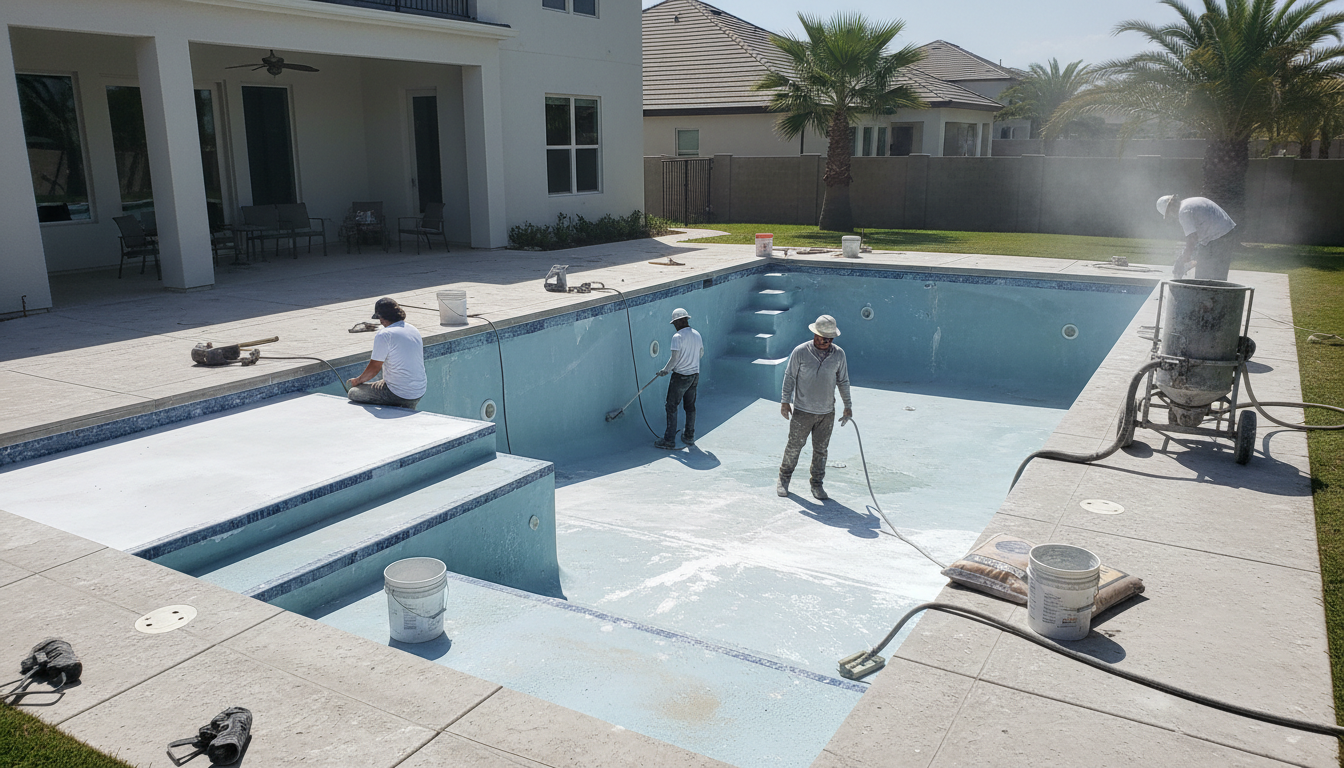
A gunite or concrete pool has a plaster topcoat applied over rough shell material – that plaster can be chipped off and reapplied. A fiberglass pool is a single molded shell with a gel coat surface fused directly into the fiberglass laminate. You cannot sandblast it off and start fresh with plaster without destroying the structural integrity of the shell. Instead, contractors either acid-wash and re-coat the existing gel coat, apply a vinyl ester barrier coat system over the top, or, in cases of serious delamination, grind back to bare fiberglass and spray on an entirely new surface layer. The process matters because it determines the price, the warranty, and how long the result will actually last.
What a 12×24 Fiberglass Pool Resurfacing Actually Costs
A 12×24 pool has roughly 288 square feet of floor and wall surface area, but with curved walls and a depth transition, most contractors price it closer to 350 to 400 square feet of actual coated surface. Add a standard tanning ledge – usually 24 to 48 square feet – and integrated molded steps adding another 20 to 40 square feet, and your total coated area is closer to 400 to 480 square feet. That surface area is the base for every line item in your quote.
| Finish Type | Cost Per Sq Ft | Total Est. Cost (12×24 + Ledge + Steps) | Typical Lifespan |
|---|---|---|---|
| Acid Wash and Gel Coat Buff | $4 to $8 | $1,600 to $3,800 | 3 to 7 years |
| Spray Gel Coat Resurfacing | $8 to $14 | $3,500 to $6,700 | 10 to 15 years |
| Vinyl Ester Barrier Coat System | $12 to $18 | $5,500 to $8,500 | 15 to 20 years |
| Full Structural Repair + Resurfacing | $18 to $30+ | $8,000 to $14,000+ | 15 to 20 years (post-repair) |
Why These Differences Matter for Your Decision
An acid wash and buff is a maintenance service, not a resurfacing job. It removes mineral scale and surface oxidation but does not add any new material. If your gel coat is just faded, a buff can buy you three to seven more years for under $2,000. If it is chalking, cracking, or blistering, a buff will look fine for about one season and then fail in exactly the same places. A full spray gel coat resurfacing applies a new surface layer – typically 20 to 30 mils thick – that bonds chemically to the cleaned shell. The vinyl ester barrier coat system adds a moisture-blocking resin layer underneath the new top coat, which is the right call when osmotic blistering is already present. According to a breakdown of fiberglass pool resurfacing costs and process details, barrier coat systems cost more upfront but often save money over a 15-year ownership window because they dramatically reduce the risk of blister recurrence.
What the Tanning Ledge and Steps Add to the Price
The tanning ledge is the single most labor-intensive part of a fiberglass resurfacing job on a 12×24 pool. Why? Because it sits in the splash zone at the waterline, where UV exposure, evaporation, and standing water combine to fade and oxidize gel coat two to three times faster than the main pool floor. By the time most owners call for a resurfacing quote, the ledge looks visibly worse than the rest of the pool. Contractors have to spend more prep time on it: grinding out any osmotic blisters, feathering the edges, and applying additional coats to match the main shell’s depth of color. Expect the tanning ledge to add $400 to $1,200 to the job, depending on its size and how much remediation it needs.
Integrated molded steps add less because they are sheltered from direct UV and do not sit in standing water the same way. Steps typically add $200 to $600 to the total. The main concern with steps is surface texture: the original anti-slip texture must be replicated in the new coating, which requires a textured spray pattern or a fine aggregate additive. If a contractor skips this step to save time, you get smooth, slippery wet steps – a real safety problem.
A Worked Example: Getting to a Real Number
Say your 12×24 pool has a 36-inch-wide full-length tanning ledge and a five-step entry stair on the opposite end. Your contractor measures 420 square feet of coated surface total. You choose a spray gel coat resurfacing at $11 per square foot. That puts materials and labor at $4,620. Add drain and refill fees (typically $150 to $400 depending on water costs in your area), a gel coat color-match charge of $150 to $300 if you want to match the original factory color, and a pool startup chemical kit to balance the fresh surface – a step where pool owners often use AquaDoc’s startup formula to protect a new coating from calcium scale in the first 28 days. Your realistic all-in number lands somewhere between $5,100 and $5,700 for that scope of work. That is a real mid-range project for a 12×24 shell in good structural condition.
What Drives Costs Up: Red Flags in the Shell Inspection
Before any contractor gives you a firm number, they should drain the pool and inspect the bare shell. The following conditions push costs significantly higher:
- Osmotic Blistering: Small raised bubbles under the gel coat are caused by water migrating through the surface. Each blister must be ground out individually, dried, and filled before any new coating is applied. Widespread blistering can add $800 to $2,500 to the job and is the reason barrier coat systems exist.
- Star Cracks: Fine radial cracks around impact points or flex zones need to be routed, filled with epoxy, and faired smooth. A single crack repair runs $75 to $200; a pool with a dozen of them adds real money fast.
- Delamination: If the fiberglass layers have separated beneath the gel coat, the area sounds hollow when tapped. This is structural, not cosmetic, and requires grinding back to sound material before resurfacing. Delamination repair adds $500 to $3,000 depending on how extensive it is.
- Poor Water Chemistry History: A shell that has spent years at low pH or high calcium levels will have microscopic surface etching that extends below where any prep work can reach cleanly. This does not always change the price, but it does shorten the realistic lifespan of the new coat.
Common Mistakes That Cost Extra Later
Getting three quotes is not enough if all three contractors are quoting different scopes. One may be quoting an acid wash, one a gel coat spray, and one a barrier coat system – and all three may say “resurfacing” on the invoice. Ask every contractor to specify the number of coats, the product name, and the mil thickness they are applying. A legitimate spray gel coat job goes on at 20 to 30 mils; anything thinner is likely to fade within a few seasons.
The other mistake is refilling too fast. New gel coat needs to cure, and most manufacturers specify a minimum 24 to 72-hour cure time before the pool is filled. Rushing the refill causes the surface to absorb water unevenly, which shows up as blotchy color within six months. Your contractor should give you a written fill schedule, not just a “wait a day or two” verbal instruction.
If you are thinking about other aspects of your pool’s volume and chemistry after the refill, the post on what pool volume means for chemical startup doses is worth reading before you start balancing the water on a fresh surface.
Getting an Accurate Quote
Ask every contractor for a line-item quote that separates drain and prep labor, surface repair (if any), primer or barrier coat (if included), finish coat material and labor, and the refill/startup allowance. A quote that just says “resurface pool – $5,000” tells you nothing about what you are actually buying. Also confirm the warranty: a quality spray gel coat job should carry a five-year warranty on adhesion at minimum; barrier coat systems from reputable applicators often come with ten-year coverage.
Regional labor rates vary enough to matter. The Southeast and Southwest tend to run on the lower end of the ranges above; the Northeast and Pacific Northwest run 20 to 30 percent higher on labor. If you are in a cold climate, note that gel coat should not be applied below 55 degrees Fahrenheit, so your scheduling window may be limited to late spring through early fall. You may also want to coordinate the resurfacing with other fall maintenance tasks – if you have not thought through what else needs attention before you close the pool, the checklist on fall pool maintenance before closing covers what most owners miss.
Frequently Asked Questions
How much does it cost to resurface a 12×24 fiberglass pool?
A 12×24 fiberglass pool typically costs $3,500 to $7,000 to resurface with a spray gel coat finish. With a tanning ledge and integrated steps included, the total usually runs $4,500 to $8,500. Barrier coat systems for pools with blistering sit at the higher end of that range, while a simple acid wash and buff for a pool in good condition can come in under $2,000.
Can you replaster a fiberglass pool the same way you replaster a gunite pool?
No. Fiberglass pools have a gel coat surface bonded to a molded shell, not a plaster topcoat. The correct process is resurfacing or refinishing using gel coat, vinyl ester resin, or an aggregate coating. Standard plaster will not bond properly to fiberglass and will fail within one to two seasons.
How much does a tanning ledge add to a fiberglass pool resurfacing cost?
A tanning ledge adds $400 to $1,200 to the total resurfacing cost on a 12×24 pool. Ledges sit in the splash and UV exposure zone, so they typically require more prep work – blister grinding, additional coats, and careful color matching – than the main pool floor does.
How long does a fiberglass pool resurfacing job last?
A professionally applied spray gel coat resurfacing typically lasts 10 to 15 years. Vinyl ester barrier coat systems can last 15 to 20 years. Maintaining pH between 7.4 and 7.6 and calcium hardness between 200 and 400 ppm is the most important factor in reaching those upper limits.
What happens if you ignore osmotic blisters on a fiberglass pool shell?
Osmotic blisters start small but grow and merge over time, eventually allowing water to penetrate the fiberglass laminate. Once the laminate is wet, you are looking at structural repair costs of $1,000 to $5,000 on top of the resurfacing job. Catching blisters early – before any major resurfacing work – keeps the repair cost to a few hundred dollars per affected area.
For a 12×24 fiberglass pool with a tanning ledge and steps, budget $4,500 to $8,500 for a full spray gel coat or barrier coat resurfacing, get line-item quotes that specify coat type and mil thickness, and treat the tanning ledge and step texturing as non-negotiable parts of the scope.