
How Long Does a Salt Cell Last and When Should You Replace It?
A salt cell typically lasts 3 to 7 years depending on water chemistry, run time, and how often you clean the plates. This guide covers the warning signs of a failing cell, what kills cells early, and how to decide between cleaning and replacing.

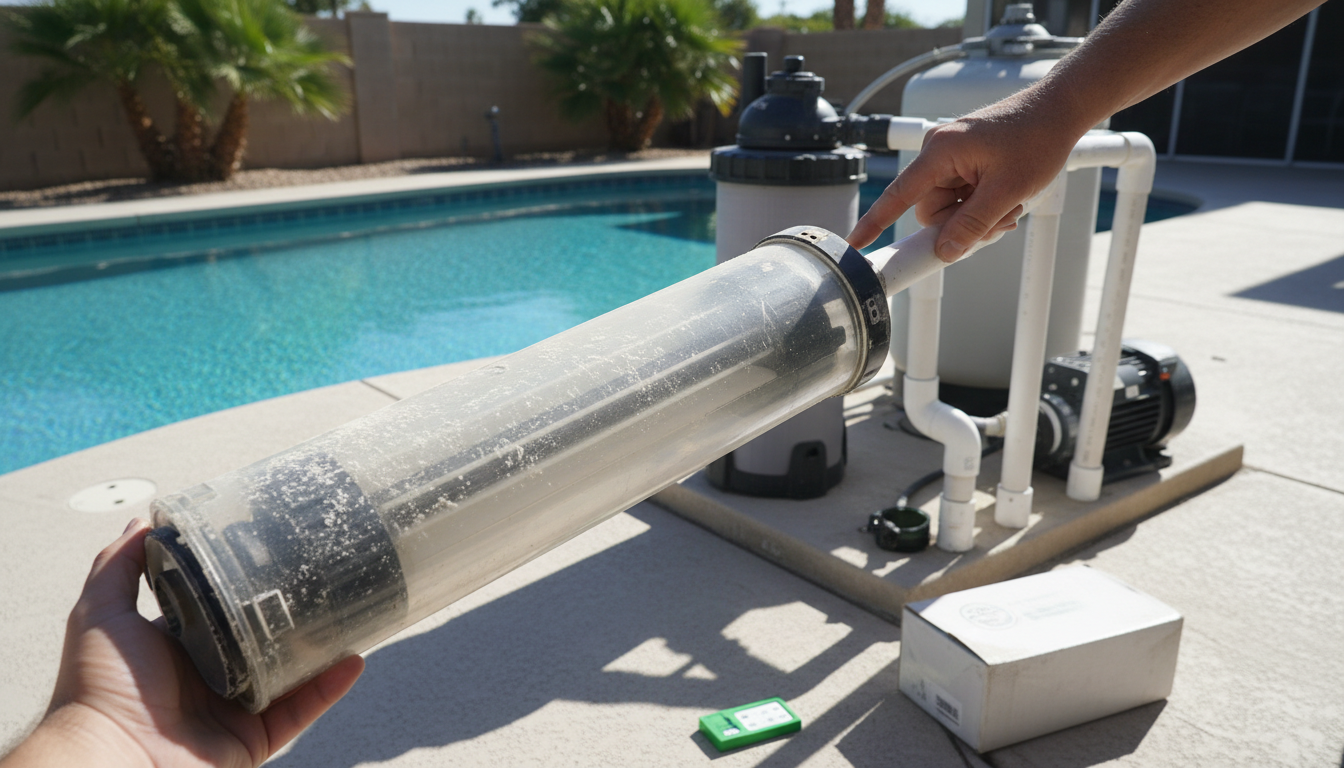
How Long Does a Salt Cell Last and When Should You Replace It?
You open the app, check the chlorine reading, and it’s basically zero – even though your salt chlorinator has been running all day. You bump the output to 100%, wait 24 hours, and nothing changes. That sinking feeling is familiar to a lot of saltwater pool owners, and it usually means one thing: the salt cell is on its way out.
Most salt cells last 3 to 7 years, with the average landing around 5 years under normal conditions. That wide range comes down to water chemistry, run time, cleaning habits, and whether you sized the cell correctly for your pool. This article walks through what a salt cell actually does, what shortens its life, the warning signs it’s failing, how to extend it with proper care, and how to decide when cleaning is no longer worth the effort.
What a Salt Cell Does (and Why the Plates Wear Out)
A salt cell – also called a chlorine generator or electrolytic cell – converts dissolved salt in your pool water into free chlorine through a process called electrolysis. Water passes over titanium plates coated with a thin layer of ruthenium or iridium oxide, an electrical current runs across them, and chlorine gas is produced right in the plumbing line before it ever reaches the pool. It’s elegant chemistry, but those coatings are finite. Every hour the cell runs, a microscopic amount of that coating wears away. When the coating is gone, the plates can no longer generate chlorine efficiently, and no amount of cleaning will fix that.
Manufacturers typically rate cells by operating hours, most commonly around 10,000 hours. Run your pump 8 hours a day and that’s roughly 1,250 days, or about 3.4 years of theoretical life at 100% output. Run it 6 hours at 70% output in well-balanced water and you could push well past 7 years. The math matters.
What Shortens a Salt Cell’s Life
Water chemistry imbalances are the biggest killers. Scale from high calcium hardness coats the plates and forces the cell to work harder for the same output, accelerating wear. Low pH causes the cell to over-produce, burning through the coating faster. Here are the conditions that cut life short:
- High Calcium Hardness: Above 400 ppm, scale deposits build up on the titanium plates quickly. Even a thin layer of scale is enough to drop chlorine output noticeably and increase the electrical load on the cell.
- pH Drift: Running consistently below 7.2 or above 7.8 stresses the cell. Low pH is especially corrosive to the plate coating; high pH accelerates scaling. Target 7.2 to 7.6 and test twice a week.
- Wrong Salt Level: Most cells are designed for a salt concentration between 2700 and 3400 ppm. Too low and the cell strains to produce chlorine; too high and you risk corrosion on other metal components. Check with a reliable tester at least monthly.
- Running at 100% Constantly: A cell sized correctly for your pool should rarely need to run at full output. If yours runs at 100% most of the time, it was undersized, and the plates will wear out proportionally faster.
- Infrequent Cleaning: Scale that sits on the plates for a full season can etch into the coating when you finally acid-wash it. Regular light cleanings are far less damaging than one aggressive annual scrub.
As AS Pools notes in their guide on salt cell longevity, keeping all three of the major variables – pH, calcium hardness, and salt level – within spec simultaneously is what separates a 3-year cell from a 7-year cell. Hit one and miss the other two and you’re still shortening the life significantly.
The Warning Signs Your Salt Cell Is Failing
A dying cell usually gives you at least a few weeks of warning before it stops working entirely. The trick is knowing what to look for and not assuming the problem is something else first.
- Low or Zero Chlorine Despite High Output Settings: If your controller shows the cell running at 80 to 100% but your free chlorine is consistently below 1 ppm, the cell is losing its ability to produce. Verify salt level and flow rate first, then suspect the cell.
- Persistent “Inspect Cell” or Fault Codes: Most controllers can measure the electrical current the cell draws. When a cell’s plates degrade, the current response changes and triggers a fault. A single code after a long winter is normal; codes every few days are not.
- Visible Plate Damage: Pull the cell out and look at the plates with the water drained. Worn plates look gray or white and may show pitting, flaking, or missing coating in patches. Healthy plates have a uniform dark metallic appearance.
- Chlorine Output That Doesn’t Respond to Cleaning: Acid-washing a scaled cell and seeing no improvement in chlorine production is the clearest sign that the issue is plate wear, not scale. If the cell cleans up visually but still underperforms, it’s time to replace it.
St. Cyr Pool and Spa’s breakdown of replacement signs makes a useful point: many pool owners keep cleaning a cell that needs replacing, spending time and acid on a problem that won’t respond to cleaning. If you’ve cleaned it twice this season and chlorine output is still low at high settings, you’re past the cleaning-versus-replacing question.
How to Clean a Salt Cell and How Often
Inspect your cell every 3 months. In hard-water areas – calcium hardness regularly above 300 ppm – monthly visual checks are smarter. To clean the cell:
- Turn off the pump and power to the chlorinator.
- Remove the cell from its union fittings.
- Rinse with a garden hose to remove loose debris.
- Mix a cleaning solution of 1 part muriatic acid to 10 parts water in a plastic bucket (never reverse the order – add acid to water).
- Stand the cell vertically, plug the bottom with the cap that came with the unit, and fill with the solution. Let it soak for 5 to 15 minutes. You’ll see fizzing as the scale dissolves.
- Drain, rinse thoroughly with fresh water, and reinstall.
Never use a metal scraper or wire brush on the plates. The coating is thin and scratches permanently. A plastic nozzle on a hose is all the physical force you should apply. EZ Test Pools’ guidance on cell replacement reinforces this point: mechanical scrubbing is one of the fastest ways to accelerate plate wear on an otherwise serviceable cell.
Sizing: The Factor Most People Get Wrong
A correctly sized cell runs at 50 to 70% output to maintain adequate chlorine. Say your pool holds 20,000 gallons. A cell rated for exactly 20,000 gallons will run near 100% output all summer, wearing out faster. A cell rated for 30,000 gallons in the same pool runs at 60 to 65%, produces the same amount of chlorine, and lasts considerably longer. The price difference between adjacent cell sizes is usually $50 to $150 – a fraction of the cost of replacing the cell two years early.
If you own stainless steel or specialty brushes for scrubbing the pool walls near the return jets, the right pool brush for a saltwater pool matters too, since saltwater chemistry affects surfaces differently than traditional chlorine pools.
What a Replacement Cell Costs
Replacement salt cells typically run $200 to $900 depending on brand, pool size rating, and whether you buy OEM or aftermarket. OEM cells from the original manufacturer are generally the safest bet for warranty coverage and plate quality. Aftermarket cells can be fine, but quality varies widely – read reviews specifically about chlorine output over time, not just initial performance.
Installation is usually a 10-minute job if you’re comfortable with basic plumbing: shut off the pump, unscrew the unions, swap the cell, restart. If you’d rather have a pro handle it, labor typically adds $75 to $150. West Coast Pool and Spa’s overview of salt cell replacement walks through the process in detail if you want a second opinion before calling a technician.
AquaDoc’s salt cell cleaner is one option pool owners use to handle routine descaling without reaching for raw muriatic acid every time – it’s pH-buffered and formulated specifically for electrolytic cells, which makes it a little more forgiving if you overshoot the soak time.
Cleaning vs. Replacing: How to Decide
Run through this quick checklist before ordering a new cell:
- Salt Level: Is it within the manufacturer’s range? Low salt mimics a failing cell perfectly.
- Flow Rate: Is the pump running long enough and is the flow switch working? A clogged filter can cut flow below the cell’s minimum threshold and shut down chlorine production entirely.
- Clean the Cell First: If scale is visible, clean it and retest over 48 hours before concluding the cell is dead.
- Check the Age: If the cell is under 3 years old and chemistry has been reasonable, the problem is more likely a water balance issue or an electronic fault than a worn cell.
- Run a Cell Test: Most modern chlorinators have a built-in diagnostic. Consult your owner’s manual – it will tell you the expected current draw range for a healthy cell and flag deviations.
As Shasta Pool Supply explains, a cell that passes the diagnostic test but still reads low output is almost always a chemistry or flow problem, not a dead cell. A cell that fails the diagnostic after cleaning is done.
Frequently Asked Questions
How long does a salt cell last on average?
Most salt cells last between 3 and 7 years. Cells run in well-balanced water with calcium hardness between 200 and 400 ppm, pH between 7.2 and 7.6, and salt levels held at the manufacturer’s target (usually 2700 to 3400 ppm) tend to reach or exceed 5 years. Poor water balance is the single biggest factor that cuts life short.
How do I know when my salt cell needs replacing instead of cleaning?
If cleaning with a mild acid solution removes visible scale but the cell still reads low chlorine output or triggers a fault code, the plates are likely worn. A cell that fails to produce adequate chlorine at 100% output after a thorough clean is ready for replacement. Most manufacturers rate their cells for around 10,000 operating hours, which is your baseline for expected life.
What happens if calcium hardness is too high in a saltwater pool?
High calcium hardness – above 400 ppm – accelerates scale buildup on the titanium plates, which insulates them and forces the cell to work harder to produce the same amount of chlorine. Heavy scale that is not removed regularly shortens cell life significantly and can permanently damage the plate coating if left untreated for a full season.
How often should you clean a salt cell?
Inspect your salt cell every 3 months and clean it whenever you see visible white or gray scale on the plates. In hard-water areas, monthly inspections are worth the few minutes they take. Most cells only need a full acid wash once or twice a season if water chemistry is well managed throughout the year.
What size salt cell do I need for a 20,000-gallon pool?
For a 20,000-gallon pool, choose a cell rated for at least 20,000 gallons, but consider sizing up to a 30,000-gallon cell if your pool sees heavy bather loads or is in a hot climate. Running a larger cell at 60 to 70% output instead of a correctly sized cell at 100% reduces plate wear and can meaningfully extend the working life of the cell.
The bottom line: a salt cell in a well-maintained pool lasts 5 years or more, and most early failures trace back to scale, pH drift, or a cell that was undersized from the start. Keep the water balanced, clean the cell on a schedule, and size up when you replace – that’s the whole formula.